Afghanistan and CSTO; Persistent Threat on Northern Borders
DID Press: Analysts believe the issue of the threat from Afghanistan to the Collective Security Treaty (CSTO) is not a short-term or tactical crisis, but a deep and structural crisis.
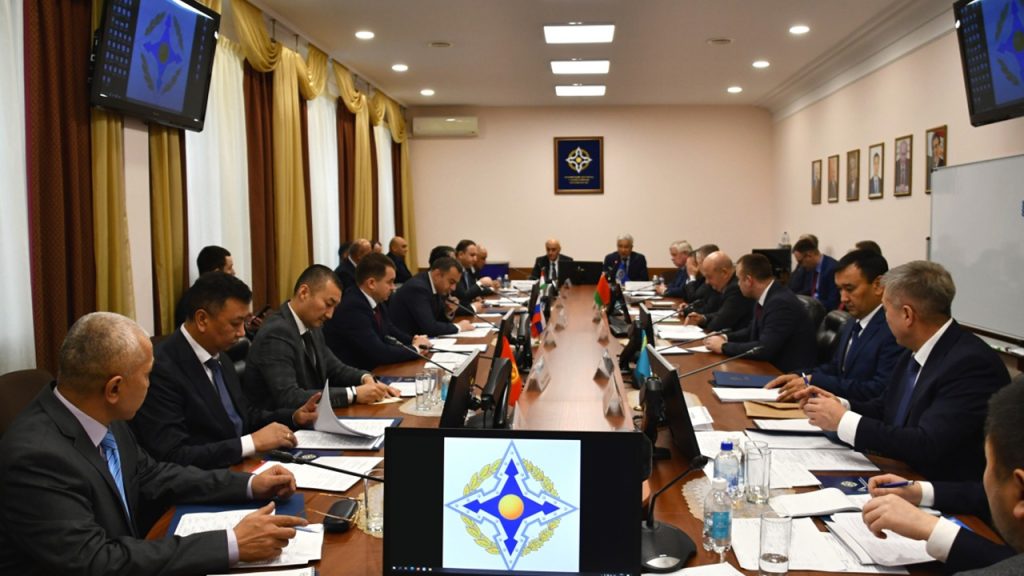
Nearly four years after the Taliban returned to power, the issue of Afghanistan’s security and its effects on the region remains at the center of the security concerns of the Collective Security Treaty Organization (CSTO). At the organization’s most recent meeting, which focused on strengthening borders, Tajikistan, as the coordinating country, presented a report on the implementation of the first phase of the plan to strengthen the southern borders. The meeting also prepared and finalized a list of military equipment, technical facilities, and infrastructure needed to contain threats from Afghanistan.
Political Interaction, Security Concern
Apparently, relations between a number of member states of the organization and the Taliban government have expanded lately. Official visits, the opening of diplomatic offices, and economic cooperation have been signs of an effort to engage with the new reality of Afghanistan, but these interactions are not meant to be security trust, but rather tactical and expedient. The CSTO ‘s spokesman had previously said explicitly that Afghanistan under Taliban rule remains “the epicenter of challenges from terrorism, extremism, and organized crime” for the region.
This gap between diplomatic reality and security threats is the most structural problem in the policymaking of the organization’s member states toward Afghanistan.
Taliban and the Crisis of Regional Trust
Since regaining control of Kabul, the Taliban have repeatedly emphasized that Afghanistan soil will not be used against any country, but numerous reports and evidence show that terrorist and paramilitary groups with trans-regional goals continue to have an active presence on Afghanistan soil. Jamaat Ansarullah, the Islamic Movement of Uzbekistan, the East Turkestan Islamic Movement, and even various branches of al-Qaeda and ISIS are among the groups that, according to international sources, use safe havens in Afghanistan for organizing, training, and propaganda.
A UN report in July 2024 warned that these groups, especially ISIS, are using Central Asian nationals and cyberspace to recruit vulnerable youth in neighboring countries and prepare them for cross-border operations.
Northern Borders; a Crisis Hotspot
Tajikistan, as the most concerned member of the CSTO, is at the forefront of these threats. Its long border with Afghanistan has always been a security concern for Dushanbe. Now, this concern has intensified with the increase in the activity of extremist groups. Reports, including one by the Special Eurasia website, indicate that extremist groups are shifting their focus from physical operations to cyber-radicalization. This trend could threaten the social fabric of Central Asian countries from within and make regional security even more fragile.
Structural crisis or transient threat?
Analysts believe that the threat posed by Afghanistan to the CSTO is not a short-term or tactical crisis, but a deep and structural one. The combination of the Taliban’s unrecognized government, the group’s inability or unwillingness to fully curb terrorism, and the presence of armed non-state actors with ideological and ambitious goals have all combined to make Afghanistan a complex security puzzle.
Even if the Taliban were genuinely interested in suppressing these groups, Afghanistan’s ethnic, geographical, and political complexities would prevent this goal from being achieved. In other words, the Taliban can at best limit this threat, but they cannot eliminate it completely.
Conclusion: Instability Continues
Overall, Afghanistan under the Taliban continues to pose a persistent and multifaceted threat to the member states of the Collective Security Treaty Organization. Mistrust, security concerns, and strategic gaps have prevented the region from moving toward sustainable security, even despite political engagements.
If the Taliban cannot (or will not) contain extremist groups operating on Afghanistan soil, a new wave of security crises may begin in Central Asia; a crisis that will not only involve borders but also challenge the internal stability of countries.
By Mohsen Movahed – DID Press