September 11 and 24 Years of Failed US Policy in Afghanistan
DID Press: While the world marks September 11 and remembers the victims of the 2001 terrorist attacks, Afghanistan people cannot forget how the day once again brought devastation to their country. Al-Qaeda attacks on the Twin Towers and the Pentagon not only killed thousands of Americans but also provided the pretext for a U.S. military intervention that lasted two decades, destroying countless lives.
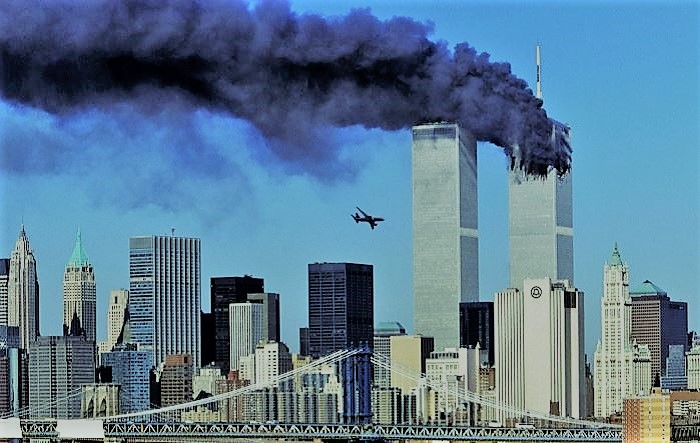
Initially framed as a mission to eliminate terrorism and build a nation, U.S. policy ultimately culminated in the chaotic withdrawal of 2021, leaving Afghanistan in crises. Although U.S. officials promised to establish a strong, capable government, more than twenty years of intervention revealed that these measures did not curb extremism. Instead, geopolitical interests often took precedence over the well-being of the Afghanistan people.
The 2001 U.S. response, Operation Enduring Freedom, targeted the Taliban and Al-Qaeda without addressing the historical roots of terrorism, including U.S. support for certain jihadist groups in the 1980s against the Soviet Union. Military action, rather than diplomacy, became the default approach.
From the outset, U.S. strategy in Afghanistan was flawed. Watson Institute’s Costs of War Project estimates that by 2022, the war cost over $2.3 trillion, much of it spent on military operations rather than rebuilding Afghanistan’s devastated infrastructure. Bombing campaigns and military operations claimed thousands of Afghanistan civilian lives, with estimates exceeding 387,000 noncombatant deaths out of a total of 940,000 war-related fatalities.
Two decades of U.S. presence turned Afghanistan into a quagmire. Washington supported puppet governments, such as those of Karzai and Ghani, fostering corruption while billions in aid flowed to elite pockets. Infrastructure remained in ruins, and facilities like Bagram prison became symbols of human rights violations.
Far from reducing terrorism, U.S. policies strengthened extremism. The Taliban, defeated in 2001, regained power by exploiting flawed Washington and Kabul strategies. A 2023 U.S. State Department report acknowledged that the lack of preparation for withdrawal was a critical error, one that devastated Afghanistan’s economy while military contractors profited.
August 2021 U.S. withdrawal, culminating in the rapid fall of Kabul, highlighted Washington’s irresponsibility. Millions were exposed to risk, creating a massive humanitarian crisis. According to a 2025 UN report, more than 22 million Afghanistan people require aid, with millions facing severe food insecurity.
U.S. policy in Afghanistan reflects a pattern of hegemonic intervention also seen in Iraq. September 11 should have served as a lesson on how colonial-style interventions devastate nations and fail strategically when based on unrealistic objectives.
The future of Afghanistan depends on independent strategies and regional cooperation, not reliance on foreign powers. The United States must learn from the mistakes of September 11 and end the cycle of interventionist policies that have brought nothing but destruction and crises.
By Ahmad Zaki Navisa – DID Press Agency