Cost of Arab-Muslim Inaction amid Israel’s Strike on Qatar
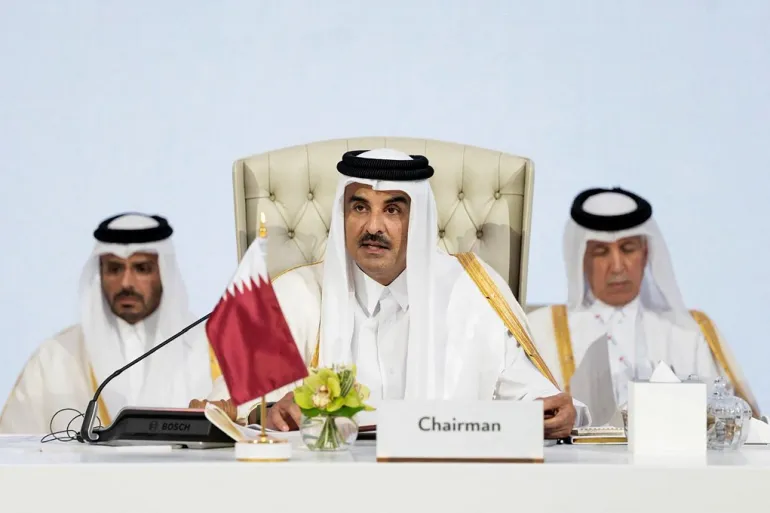
DID Press: Israel’s recent strike on Qatar soil was not merely a limited military incident; it marks a widening trajectory in the regime’s aggressive strategy. Because this attack openly violated the sovereignty of an Arab state and posed a direct threat to regional security, the response of Arab and Muslim governments was more important than ever. Yet what we witnessed—especially after the emergency Arab–Islamic summit in Doha produced a bland, ineffectual final communiqué—was largely paralysis: inaction, empty statements, and diplomatic hedging. This disappointing stance carries heavy long-term costs and risks emboldening Israel to bring all regional states within the orbit of its threats and incursions.
Inaction as an Incentive to Aggression
Over decades Israel has shown that, backed by unconditional U.S. support and facing a fragmented Arab–Islamic front, it will expand its incursions whenever it meets little resistance. Silence and passivity after the bombing of Qatar amount to a green light. When a country that hosts major Western facilities and is an economic partner for many Arab states is attacked with no substantive response from allies, Israel calculates that the strategic gains outweigh the costs.
Divisions within the Arab World and Conflicting Priorities
A core reason for this paralysis is the deep fracture among Arab states. Many have pursued normalization with Israel in recent years and are therefore unwilling to confront Tel Aviv. Others, dependent on Western security and economic ties, similarly avoid confrontation. As a result, the Palestinian cause—and now the attack on Qatar—has been deprioritized and relegated to the margins of regional diplomacy.
Security Consequences for the Entire Region
Passivity over the strike on Qatar will not remain limited to that country. Historical precedent shows that when unacceptable actions go unchecked, their scope expands. If Qatar can be targeted without a serious response today, tomorrow it could be Kuwait, Oman or even Saudi Arabia. The cycle will continue unless the region mounts a coordinated, deterrent response. Current inaction therefore places not just Qatar but all Arab and Muslim states at heightened risk.
Erosion of the Islamic World’s Standing with Public Opinion
This powerful silence also deepens public disillusionment across the Muslim world. Populations that have watched Gaza’s devastation now see that even when a sovereign Arab state is directly attacked, governments respond mostly with diplomatic statements. That disconnect fuels public frustration and can create fertile ground for protest movements—and potentially for extremist currents.
A Historic Responsibility and the Way Out
Arab and Muslim states face a historic test. Failure to form a unified front and take concrete measures against Israel will jeopardize collective security and reshape the regional order in Tel Aviv’s favor. Practical steps could include coordinated action in international fora, economic measures such as sanctions or restrictions against firms aiding Israel, and robust political and material support for Palestinian and regional mediation efforts. Without such measures, rhetoric alone will not alter Israeli behavior.
Conclusion
The strike on Qatar is a stark warning for the entire Arab and Muslim world. Current passivity not only emboldens further aggression, it also weakens the region’s political and security standing. If this trajectory continues, no state will be safe from the next escalation. The moment for decisive, collective action is now: either the Arab and Muslim world raises the cost of Israeli transgressions, or each state must prepare to face such threats alone.
By Mohsen Mowahed — DID Press Agency