Bagram and Washington–Kabul Dispute Over Region’s Future
DID Press: Recent developments surrounding Bagram Air Base, along with domestic and regional reactions, have once again placed Afghanistan at the center of geopolitical calculations. Donald Trump’s remarks on reclaiming Bagram, China’s explicit response, and Islamabad’s cautious silence present a complex picture of the region’s political and security future.
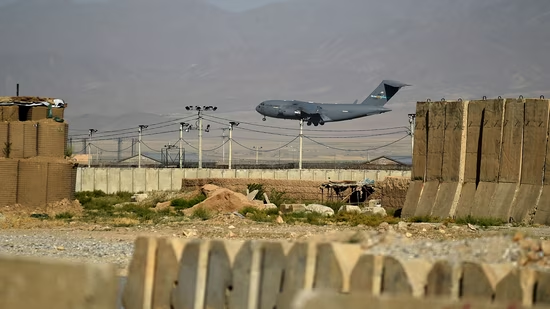
At the international level, a potential U.S. return to Bagram goes beyond a tactical move, signaling a possible redefinition of Washington’s Afghanistan policy. Bagram’s proximity to China, its position along Central Asia’s strategic routes, and the substantial U.S. investments in the base have led some Republican politicians, such as Riley Moore, to call it a “strategic necessity.” However, potential human and financial costs, combined with strong regional opposition, make this scenario difficult and costly. China, Russia, and Iran have clearly opposed a renewed U.S. military presence in Afghanistan, potentially facilitating a regional consensus against Washington.
Domestically, the Taliban, emphasizing independence and national sovereignty, have rejected any U.S. military return. Recent claims regarding Washington’s financial and political offers to reclaim Bagram—and the Taliban’s rejection—form part of a psychological campaign to demonstrate decision-making autonomy and reinforce domestic legitimacy. The Taliban aim to convince Afghanistan public that the country will no longer serve as a “playground for foreign powers,” even though their political survival remains tied to engagement with regional and extra-regional powers.
Meanwhile, Islamabad’s silence on Bagram, coupled with its focus on the TTP threat, reflects Pakistan’s security priorities. Pakistan is acutely aware that a U.S. return to Bagram could shift the regional balance, yet its main concern remains increased TTP attacks emanating from Afghanistan territory. The explicit warning that “Kabul must choose between Pakistan and the TTP” places bilateral Kabul–Islamabad relations under new pressure.
Overall, Afghanistan finds itself at the intersection of domestic developments and regional geopolitical competition. A potential U.S. reclaiming of Bagram can alter the country’s security dynamics while setting the stage for renewed confrontation between regional powers and Washington. At the same time, Pakistan’s pressure on Kabul and public discontent with Taliban caretaker policies present additional challenges. Afghanistan’s future depends on how the Taliban balance engagement with foreign powers, manage regional pressures, and respond to domestic demands—a balance that, under current circumstances, appears difficult to achieve.
By Mohsen Mowahed