Bagram: Test of Taliban Government’s Independence and Authority amid US Pressure
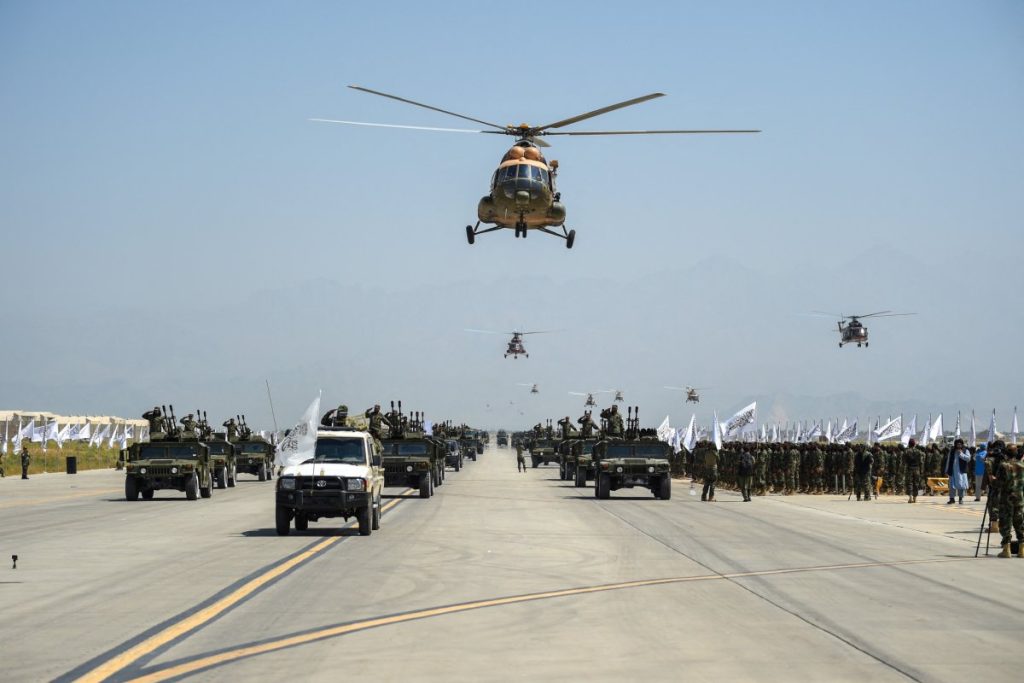
DID Press: Bagram Air Base, a historical symbol of Afghanistan’s military strength and independence, has once again become the center of international attention. Recently, U.S. President Donald Trump issued warnings and threats demanding the return of this strategic airbase, sparking significant reactions both domestically from Taliban officials and on a regional and global scale.
However, Zalmay Khalilzad, former U.S. Special Representative for Afghanistan, said on X social media platform that “a lot of incorrect and misleading information” has been spread about the future of U.S.-Afghanistan security cooperation, and emphasized that “the United States does not intend to seize Bagram from Afghans or annex it.” Despite this, the key phrase in such remarks is “joint counterterrorism operations”—a term the U.S. frequently uses to justify re-entry into Afghanistan and potentially returning to Bagram.
From Taliban government’s perspective, any form of U.S. presence at Bagram—military or civilian—is seen as a direct threat to their independence and authority. In the minds of Taliban leaders, Bagram has become a historic symbol of resistance against foreign occupation and a strategic stronghold for defending national sovereignty. The presence of even a single American soldier or official at this base would signal that the Taliban has conceded to the U.S., rendering their long struggle against foreign occupiers meaningless.
Political analysts believe that the U.S., under the pretext of “joint counterterrorism operations,” is aiming to return to Bagram—not purely for security reasons. Even if such a presence is limited to non-military or anti-terror purposes, it sends a strategic message to the Taliban’s caretaker government, as well as to Russia and China: that Afghanistan remains under U.S. influence and surveillance, and the Taliban’s sovereignty is still in question.
This situation places Taliban leaders in a difficult position. They now face a historic crossroads: either maintain genuine independence and demonstrate strength against external pressure, or accept the U.S. presence and consequently lose part of their legitimacy—a legitimacy built on jihad and resistance against occupation. Moreover, any retreat in the face of Washington’s demands could pave the way for further pressures and weaken their position on other international fronts.
Additionally, media and psychological implications of this issue are critical. Afghanistan media and public opinion are likely to interpret any U.S. presence at Bagram as a sign of reduced authority and independence of the Taliban government. Taliban leaders must recognize that even the smallest concession in this matter could undermine public trust in their leadership and spark political and social crises at the national level.
Strategically, Bagram plays both a symbolic and practical role. It is not only a military operations hub but also a representation of Afghanistan’s ability to defend itself and resist foreign influence. The U.S. returning to this base—even under the label of counterterrorism cooperation—would damage this symbol and suggest that the Taliban still lack full control over the country.
On the international stage, the U.S. is attempting to use its potential return to Bagram as a lever of pressure to send a message to rival powers such as Russia, China, and Iran: that Afghanistan remains within Washington’s sphere of influence and that the Taliban have not yet achieved full practical independence. This poses a serious challenge for the Taliban, as any reaction or concession will be closely scrutinized by the global community and could affect their standing on the international stage.
Conclusion
Bagram has become a major test of Taliban government’s independence, authority, and capability to manage domestic affairs and resist foreign pressure. The decision on how to respond to U.S. interest in re-entering Bagram is not merely a security or operational matter—it is a matter of dignity and existential importance for the Taliban. Their leaders must fully understand the symbolic and strategic significance of this base and adopt a strategy that preserves national sovereignty. True independence is not easy to maintain—it comes at the cost of resisting external influence and imposed conditions.
By Mohsen Mowahed