Palestine and Beyond: Hassan Nasrallah’s Strategic Vision to Liberation of Nations
DID Press: The first anniversary of martyrdom of Hassan Nasrallah, the charismatic and unparalleled leader of Lebanon’s Hezbollah, offers an opportunity to reassess his strategic position in regional and global dynamics. Nasrallah was not only a military commander and political leader but also a symbol of resistance and Islamic awakening, playing a pivotal role in redefining the balance of power in the Middle East. At a time when the Islamic world struggled under the pressures of global imperialism and Israeli occupation, fragmented by divisions and internal conflicts, Nasrallah revived the concept of a “united Ummah”—not through empty slogans but through active engagement on the battlefield alongside Palestinian fighters in Gaza, turning this ideal into a tangible reality.
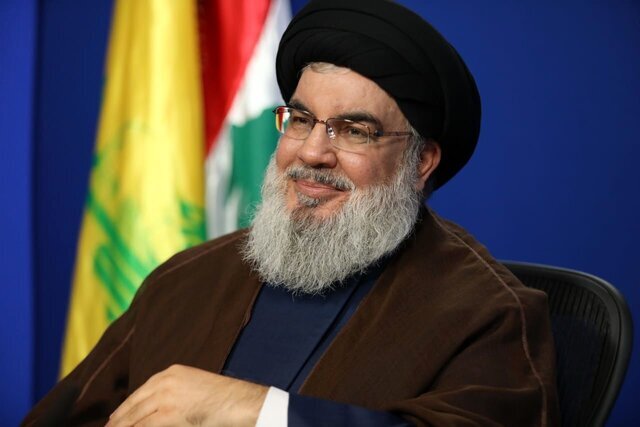
Nasrallah and the Palestinian Cause: From Solidarity to Strategic Centrality
Palestine held a fundamental place in Hassan Nasrallah’s worldview. He repeatedly emphasized that “the Palestinian issue is not merely an Arab concern but an Islamic and human one.” His perspective transcended ethnic and geographical boundaries, reflecting a belief that freedom and dignity across the region were inseparable from the liberation of Palestine. Under Nasrallah’s leadership, Hezbollah emerged as a serious supporter of Palestinian resistance groups, providing backing not only rhetorically but also in practical terms on the battlefield and in foreign policy.
Today, on the first anniversary of his martyrdom, the global wave of support for Palestine is evident—from the heart of the United States to Latin America, Europe, Africa, and from Kabul to Sana’a. People worldwide have voiced a unified defense of Palestine, confirming that Nasrallah’s legacy continues to energize the Islamic and global awakening. His martyrdom on September 27, 2024, marked not the end but the beginning of a new chapter in the global struggle against Zionism and colonialism.
Unity of the Ummah: From Lebanon to Afghanistan
A core principle of Nasrallah’s thought was the belief in the unity of the Islamic Ummah against occupation and domination. He consistently stressed that geographical borders should not hinder solidarity among Muslim nations. Nasrallah spoke explicitly about Yemen, Syria, Iraq, Palestine, and Afghanistan. His approach to Afghanistan was not mere political sympathy but stemmed from a deep understanding of the shared struggle of nations resisting occupiers and tyrants who, under the guise of combating terrorism, promoting democracy, or protecting human rights, advance neocolonial agendas across Muslim lands.
He cited the United States’ failure in Afghanistan as clear evidence of the power of national will. Nasrallah believed that independence, freedom, and resistance formed a sacred triangle capable of shaping the destiny of nations—a perspective that earned him deep respect and mourning in Afghanistan upon his martyrdom.
A Remarkable Record: Defeating Israel and Inspiring Globally
Nasrallah’s track record demonstrates that he was not only a military strategist but also a thinker and political tactician of remarkable skill. The defeat of Israel in 2000, culminating in the withdrawal of its forces from southern Lebanon, marked a historic turning point. Six years later, during the 33-day war, he once again demonstrated that the myth of Israeli invincibility was just that—a myth—shattering it before the steadfast will of mujahideen fighters.
Domestically, Nasrallah transformed Hezbollah from a resistance group into a powerful political and social force, central to Lebanon’s national equation. Regionally, he established a network of anti-occupation solidarity stretching from Gaza to Sana’a, and from Baghdad to Kabul. On this first anniversary of his martyrdom, it is the responsibility of conscientious media not only to recount history but also to preserve Nasrallah’s legacy as a factual account of resistance and to pass on his enduring example to future generations.
A Lasting Legacy for the Future
Hassan Nasrallah repeatedly emphasized that “leaders come and go, but the path of resistance is eternal.” His martyrdom exemplified this principle. Today, his legacy is visible not only in Lebanon but throughout the Islamic world and beyond, illuminating the path for all justice-seeking peoples. Nasrallah remains a lasting model for those who stand against oppression and occupation, regardless of their political, ideological, or religious affiliations.
Ultimately, the first anniversary of Hassan Nasrallah’s martyrdom is not only a reminder of the loss of a great leader but also an opportunity to reaffirm the path of resistance—a path he sanctified with his life, calling the world to a single truth: no oppression or occupation can endure if nations unite and resist.
By Rahel Mousavi