Moscow Format Signals Shift in Regional Cooperation on Afghanistan
DID Press: Final communiqué of Moscow Format on Afghanistan reflects a renewed sense of regional convergence around Afghanistan’s stability and integration. Regional states increasingly recognize that Afghanistan’s instability directly affects their collective security and economic development.
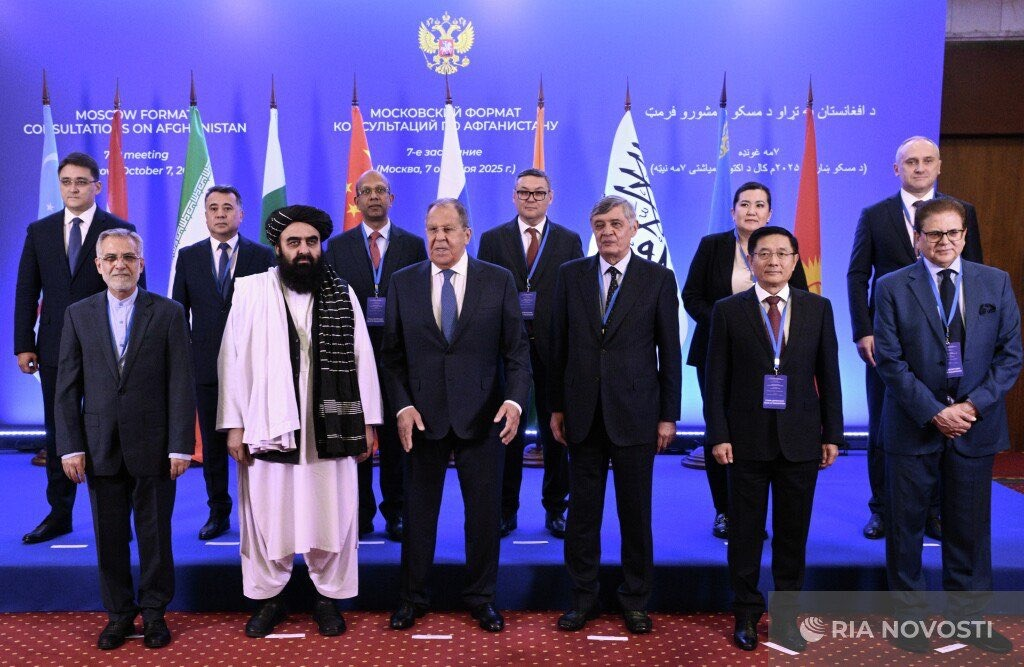
The seventh round of the Moscow Format once again placed Afghanistan’s geopolitical importance at the center of regional diplomacy. The joint statement highlighted support for Afghanistan’s sovereignty and territorial integrity, opposition to any foreign military presence, promotion of economic cooperation, and the vision of a regionally integrated Afghanistan.
This commentary examines the key themes of the declaration, its political and security implications, and potential pathways for implementation. Findings suggest that lasting stability in Afghanistan depends on three interlinked factors: regional cooperation, internal political legitimacy, and balanced diplomacy.
Key Elements of Moscow Format Declaration
- Upholding Afghanistan’s sovereignty and territorial integrity
Participants reaffirmed support for Afghanistan as an independent, unified, and peaceful state—rejecting any form of external interference or instrumentalization in geopolitical rivalries. - Rejection of foreign military presence
All parties declared the establishment or reintroduction of foreign military bases in Afghanistan “unacceptable,” signaling regional consensus on the principle of Afghanistan’s military neutrality. - Commitment to economic and developmental cooperation
The statement called on stakeholders to fulfill prior commitments toward Afghanistan’s reconstruction and development through financial aid, investment, and infrastructure projects. - Regional connectivity and integration
The conference welcomed Afghanistan’s inclusion in transregional trade, transit, and energy projects—reflecting a shift in perception toward viewing Afghanistan as a connector of regional economies rather than a source of instability. - Counterterrorism coordination
Participants agreed to expand intelligence and security cooperation to prevent terrorist groups from using Afghan soil to threaten neighboring countries. - Continued humanitarian support
The communiqué emphasized that humanitarian aid for the Afghan people must continue and remain free from political manipulation.
Emerging Regional Consensus
The Moscow Format signifies a shift from traditional, security-centered approaches toward development-oriented and connectivity-based regional strategies. Nonetheless, several structural challenges remain:
Absence of an inclusive and politically legitimate government
Institutional weakness in attracting investment
Ongoing border insecurity and resurgence of militant networks
Without addressing these core issues, implementing the Moscow Format commitments will remain difficult.
Policy Recommendations for Implementation
- Establish a Regional Economic Cooperation Framework
Create a Regional Infrastructure Coordination Council involving Moscow Format members.
Utilize multilateral financing mechanisms to fund energy and transit projects.
- Strengthen Afghanistan’s Diplomatic Engagement
Revive active participation in organizations such as ECO and the Shanghai Cooperation Organization (SCO).
Set up a Regional Connectivity Coordination Office in Kabul to oversee joint initiatives.
- Develop a Joint Counterterrorism Strategy
Convene regular security dialogues among neighboring intelligence and defense agencies.
Focus on deradicalization and education-based prevention of extremism.
- Attract and Protect Investment
Pass laws ensuring legal guarantees for foreign investors.
Issue international guarantees for key infrastructure projects such as TAPI, CASA-1000, and Lapis Lazuli Corridor.
- Ensure Transparent Humanitarian Coordination
Establish a Regional Humanitarian Coordination Center under neutral oversight.
Use digital monitoring systems to ensure fair distribution of aid.
- Facilitate Intra-Afghan Dialogue
Regional states should act as facilitators to promote dialogue among Afghanistan’s political, ethnic, and civil forces—laying the foundation for a stable and representative political structure.
Conclusion
As one of the most important regional consultation platforms, Moscow Format reaffirms that Afghanistan’s stability depends on constructive cooperation among neighbors and responsible engagement by the international community.
Translating these commitments into tangible outcomes will require active diplomacy, inclusive governance, and coordinated regional action. If achieved, Afghanistan could move beyond crisis and emerge as a vital hub of regional economic connectivity—a role aligned with both its geography and history.
By Sayed Ayub Hussaini | DID Press Agency