Sharm el-Sheikh Summit: US Reclaims Middle East Power amid China and Russia Absence
DID Press: Sharm el-Sheikh summit marks a turning point in the political and geopolitical reorganization of the Middle East after years of turmoil, proxy wars, and failed peace initiatives. Donald Trump’s new proposal for Gaza, which received a cautious but notable welcome from several Arab and Islamic states, signals the beginning of a new regional order—one in which the United States once again emerges as the central power, while rivals such as China and Russia are excluded from the decision-making arena.
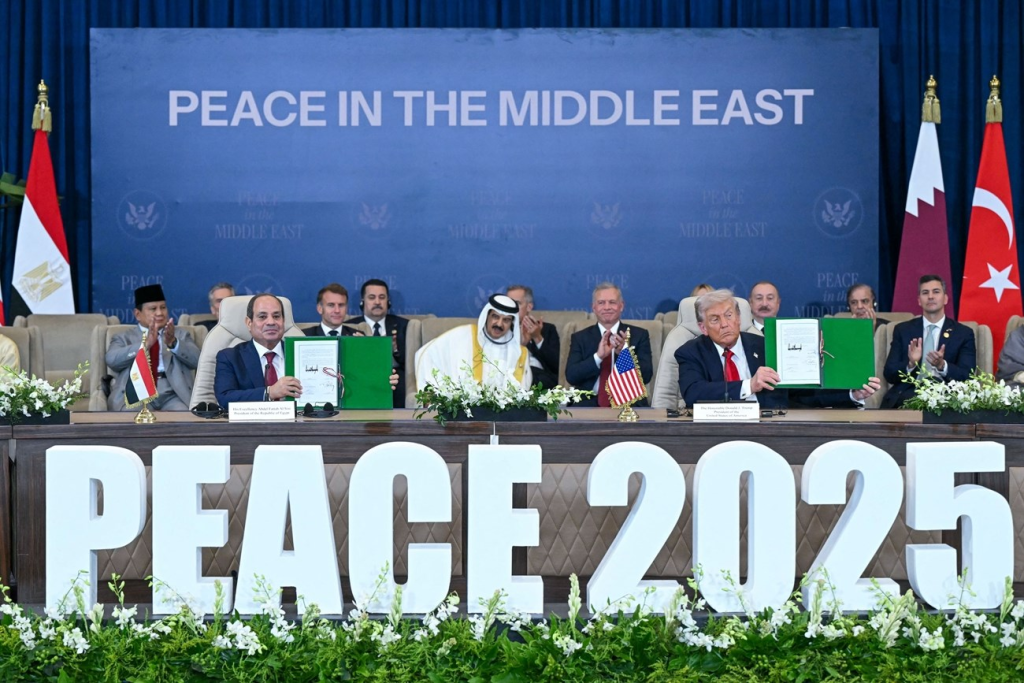
On the surface, Trump’s initiative focuses on halting the war and preventing a humanitarian catastrophe in Gaza. In essence, however, it reflects Washington’s long-standing strategy of consolidating influence in the Middle East and containing rival blocs.
In recent years, the U.S. has capitalized on Russia’s post-Ukraine-war weakness and China’s limited security role in the region to fill the emerging power vacuum—echoing the 1990s, when America, following the Soviet collapse, stood as the world’s uncontested hegemon and intervened decisively in crises such as Bosnia and Kosovo.
According to analysts, the swift approval of Trump’s plan by eight Arab states does not necessarily signify full agreement with its content but rather underscores structural dependencies and practical constraints. These governments, heavily reliant on U.S. military protection, economic assistance, and political stability, face internal crises, public pressure over Gaza’s humanitarian situation, and anxiety about Iran’s growing regional influence—all of which drive them toward alignment with Washington.
The exclusion of China and Russia from the Sharm el-Sheikh meeting sends a clear signal: the return of a unipolar order and the revival of America’s role as the ultimate arbiter of Middle Eastern conflicts.
China, though a major economic player, remains secondary in military and security terms, while Russia—exhausted by its engagements in Syria and Ukraine—has lost much of its regional leverage. Consequently, the summit symbolized the reemergence of an “American peace” in a new form—one defined squarely within Washington’s strategic framework.
Interestingly, Iran’s invitation to the summit carries layered implications. Unlike China and Russia, Iran’s inclusion could signal Washington’s interest in keeping diplomatic channels open and preventing direct confrontation. Trump’s relatively moderate rhetoric toward Tehran in recent days supports this view. Given Washington’s strategic focus on competition with Beijing, it seems unlikely that the U.S. seeks to open a new front against Iran at this stage.
In conclusion, the Sharm el-Sheikh summit was not merely an effort to establish a ceasefire in Gaza—it was a reflection of a broader power realignment in the Middle East, tilting once more toward the United States. The weakening of Eastern actors, the deepening reliance of Arab states on American guarantees, and Iran’s pivotal role in this evolving balance all point to the dawn of a new geopolitical chapter—one in which Washington seeks to reshape the regional order, not through war, but through directed diplomacy serving its own strategic design.
By Mohsen Mowahed – DID Press Agency