Pakistan-Taliban Border Clash Escalates amid Security, Historical, and Regional Rivalries
DID Press: Relations between Pakistan and the Taliban government, once considered “strategic allies,” have deteriorated into military confrontation, raising the risk of a full-scale war between the two neighbors. This escalation is not sudden, but the result of years of mistrust, conflicting interests, and differing interpretations of “friendship” in South Asian geopolitics.
Historical Roots and Islamabad’s Miscalculations
Since the 1990s, Pakistan supported the Taliban as a proxy force in Afghanistan, aiming to secure “strategic depth” against India. Islamabad believed that Taliban control of Kabul would ensure a compliant government on its western border. However, the past four years have shown that while the Taliban’s policies often aligned with Islamabad, the group was unwilling to serve as a puppet regime.
Following the Taliban’s return to power in August 2021, Pakistan’s expectation of cooperation on border security and suppression of the Tehrik-i-Taliban Pakistan (TTP) went unmet. On the contrary, attacks by the TTP—aligned with the Afghan Taliban—increased inside Pakistan, particularly in Khyber Pakhtunkhwa and Balochistan, prompting Islamabad to accuse the Taliban of harboring terrorists.
The Central Role of TTP
After the Taliban assumed power in Kabul, the TTP consolidated positions along the border. Despite initial Taliban promises to mediate or restrain the group, many TTP commanders moved freely within Afghanistan. Ideological and ethnic considerations prevented the Taliban from taking action against co-ethnics, prompting Pakistan’s military to launch major cross-border operations, including airstrikes on Kabul for the first time, which elicited retaliatory Taliban attacks.
Durand Line and Ethnic Identity
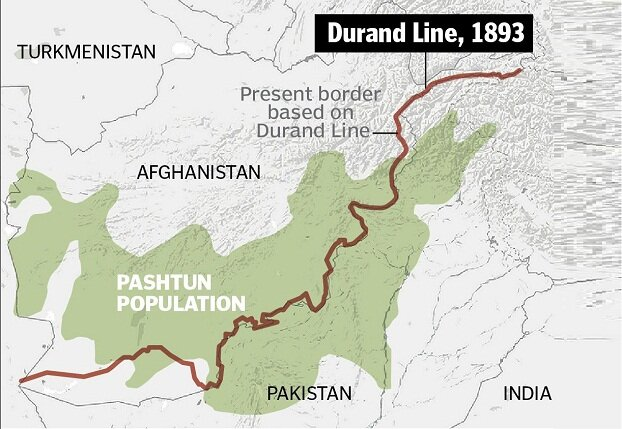
A core point of tension is the Durand Line. The Afghan Taliban have never recognized it as the official border, referring to it as a “colonial imposition.” Pakistan, by contrast, insists on its international legitimacy and has repeatedly attempted to solidify it with fences and military infrastructure. Every attempt has sparked border clashes and worsened bilateral relations.
Internal Divisions within Taliban
Analysts note divisions within the Taliban regarding Pakistan. The Kandahar faction, led by Mullah Hibatullah Akhundzada, favors independence from Pakistan’s ISI, while elements linked to the Haqqani Network maintain ties with Islamabad. These internal contradictions have prevented a unified Taliban policy toward Pakistan, deepening mutual distrust.
Diplomatic Failures and Limited Regional Mediation
Recent diplomatic efforts, including secret meetings in Kabul, Islamabad, and Doha, have yielded little. Pakistan, citing repeated border attacks, is unwilling to rely solely on negotiation. The Taliban, asserting a position of strength, frames any military action as defense of Afghanistan’s territorial integrity. Consequently, diplomacy has given way to artillery and airstrikes.
Regional powers such as China, Iran, and Russia, despite having working economic ties with the Taliban, have largely remained cautious, issuing only ethical reminders to exercise restraint, which has freed Islamabad to pursue military measures.
Economic and Geopolitical Dimensions
The Taliban-Pakistan conflict is more than a border dispute. It threatens regional trade routes, energy projects like CASA-1000 and TAPI, and commerce between Central and South Asia. Economic pressures and insecurity on both sides of the border also risk triggering new waves of migration.
Geopolitically, the breakdown in Taliban-Pakistan cooperation benefits India, which may exploit the rift to expand influence in Afghanistan.
Summary
The recent border war stems from three main factors: security conflicts (TTP), historical disputes over the Durand Line, and competition for influence and independent decision-making in Kabul.
The Taliban seek to demonstrate that they are an independent government, while Pakistan aims to assert that it can still influence Afghan affairs.
Without dialogue and trust, both sides are on a collision course that could destabilize not only bilateral relations but the entire regional security architecture. If no mechanism is established to manage the crisis and return to diplomacy, the conflict could become one of the longest and costliest border tensions in modern South Asian history.
By Mohsen Mowahed