Uzbek Language Day Marks Milestone in Afghanistan Education and Culture
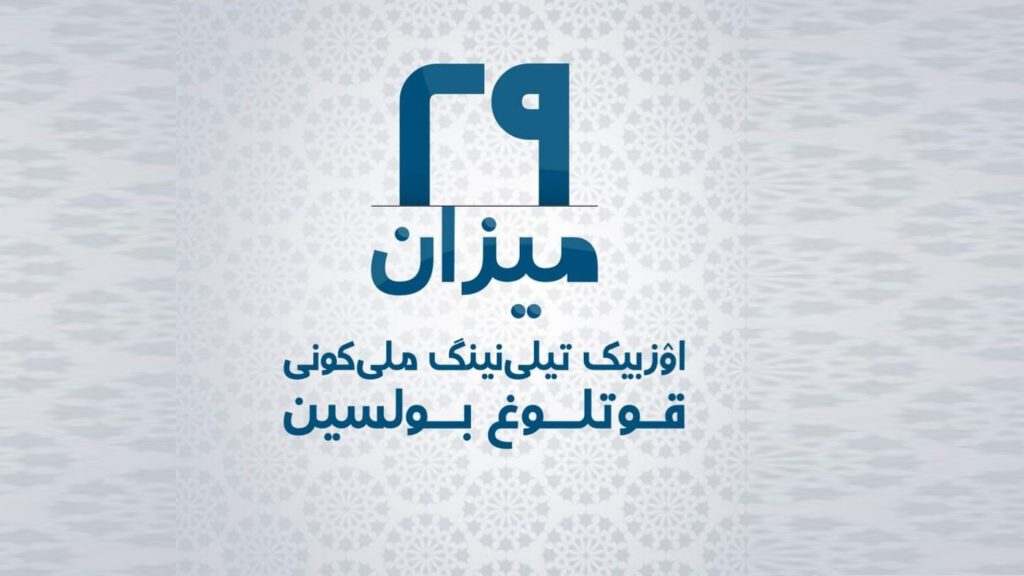
DID Press: First and foremost, we warmly congratulate all our fellow citizens—especially Uzbek speakers—on the occasion of 29 Mizan (October 21), celebrated as Uzbek Language Day in Afghanistan. Secondly, we present a brief overview of the legal recognition of “third languages” in Afghanistan, with a focus on the Uzbek language.
Experts in education and linguistics emphasize that teaching children in their mother tongue is among the most effective methods for successful learning and cognitive development.
The right to education, communication, and cultural participation in one’s native language is both a human and legal aspiration for every individual.
During the final years of King Mohammad Zahir Shah’s reign, 15-minute radio programs in Uzbek and Turkmen were launched for the first time and were met with wide public enthusiasm. However, this modest initiative was later halted under the rule of Mohammad Daoud Khan.
In 1978 (1357 SH), during the first year of the Democratic Republic of Afghanistan, Revolutionary Council Decree No. 4 officially recognized “third languages,” including Uzbek and Turkmen, as regional official languages alongside Pashto and Dari in areas where large numbers of speakers lived. Following this decree, these languages were introduced in government offices, schools, universities, the press, and national radio and television.
Within the Ministry of Education, a new curriculum department for third languages was established to produce textbooks. Schools began teaching in mother tongues; the Faculty of Languages and Literature at Kabul University opened its first Uzbek Department; and research and broadcasting units were formed in academic and cultural institutions as well as national radio and television.
Although this progress slowed during the mujahideen era and subsequent civil wars, the period of the Republic—benefiting from freedom of expression, technological growth, and improved publishing—saw renewed development in the use of mother tongues, including Uzbek.
During the Constitutional Loya Jirga under President Hamid Karzai, the issue of granting official status to third languages became one of the most debated topics. Government officials initially sought to address the matter by presidential decree, but representatives of Uzbek and Turkmen communities insisted on explicit constitutional recognition.
As a result, after more than twenty days of deliberation, Article 16 was adopted, officially recognizing these languages in the Constitution.
For several years thereafter, 14 Jadi (the day the Constitution was ratified) was observed as Uzbek Language Day. Later, through a presidential decree and cabinet approval, 29 Mizan (October 21) was designated as the official “Uzbek Language Day.”
Since then, third-language departments have been legally authorized to operate in educational, cultural, and scientific institutions. Among them, Uzbek has shown particularly strong and widespread growth—at times even rivaling the two national languages, Pashto and Dari, in certain fields.
The main reasons for this success are the rich historical and cultural heritage of the Turkic-Uzbek language and the tireless efforts of Uzbek scholars, writers, poets, artists, and intellectuals.
Thanks to this legal recognition, significant advances have been made across governmental and non-governmental educational and cultural spheres. Uzbek language and literature departments have been established at Kabul University and major northern universities. Teacher-training institutes in northern provinces have opened Uzbek sections. The ministries of Education, Information and Culture, National Radio-Television, and the Academy of Sciences all formed special Uzbek divisions.
Private media have also flourished: dozens of newspapers, radio stations, and TV channels now broadcast in Uzbek alongside Pashto and Dari. Hundreds of books—classical and modern—by Uzbek scholars and writers have been published, including complete works of Mir Ali-Shir Nava’i, as well as those of Maulana Lutfi Herawi, Zahir-ud-Din Muhammad Babur, Mashrab, Aghahi, Fuzuli, Sultan Husayn Bayqara, Shah Gharib Mirza Gharibi, Atayi Balkhi, and others.
Alongside Pashto and Dari curricula, the Ministry of Education developed Uzbek-language textbooks from grade 1 through 12. Uzbek artistic groups were formed in the capital and provinces, winning awards at national festivals.
Dozens of national and international seminars were held on Uzbek language, literature, history, and culture, celebrating prominent Turkic and Uzbek figures. Hundreds of professionals have graduated in Uzbek from Afghan universities and foreign scholarship programs—many earning master’s and doctoral degrees.
Modern Uzbek literature, both prose and poetry, has entered a new phase of creativity. Collections of contemporary poetry, short stories, plays, satires, novellas, and novels have been written and published. Numerous works by Afghan and foreign authors have been translated into Uzbek.
A particularly noteworthy academic achievement has been the compilation of monolingual (Uzbek-Uzbek) and bilingual (Uzbek-Dari) dictionaries. In the past two decades, nearly ten Uzbek dictionaries of various scopes and subjects have been authored—an accomplishment unmatched even in the two national languages, Pashto and Dari.
This success stems from the deep linguistic and cultural roots of the Turkic-Uzbek language, the dedication of its speakers, and the persistence of Uzbek scholars and researchers. Uzbek intellectuals have received prestigious national and international awards from Afghanistan, Uzbekistan, Kyrgyzstan, Türkiye, and Iran, reflecting the cultural richness and scholarly standing of the Uzbek language.
Notable honors include:
The Dr. Mohammad Moeen International Award (Iran) for the two-volume Yarqin Uzbek–Persian Dictionary.
Recognition of the Uzbek–Persian Dictionary among the Top 10 Books of the Year at the Tehran International Book Fair (2007), with a special certificate from Iran’s Ministry of Culture.
The Golden Babur Medal and the First Prize in Satirical Writing from Uzbekistan, as well as awards from Afghanistan’s Ministry of Information and Culture and civil institutions.
These achievements demonstrate the high cultural value, intellectual capacity, and vitality of the Turkic-Uzbek language alongside Afghanistan’s official languages, Pashto and Dari.
In conclusion, while briefly summarizing the academic and cultural contributions of Afghan Uzbek scholars, we once again sincerely congratulate all compatriots—especially Uzbek speakers—on Uzbek Language Day.
We pray to Almighty God for the prosperity of our beloved homeland and peace for all our people.
Mohammad Halim Yarqin – Uzbek Linguist and Researcher