Istanbul Talks Deadlocked as Taliban Lose Battle of Narratives
DID Press: The 3rd day of negotiations between the Taliban government and Pakistan in Istanbul has ended without any progress or joint statement, highlighting deep rifts between the two sides. Analysts say Pakistan has gained the upper hand in shaping the public narrative around the talks, while the Taliban’s silence and secrecy have weakened its political and regional standing.
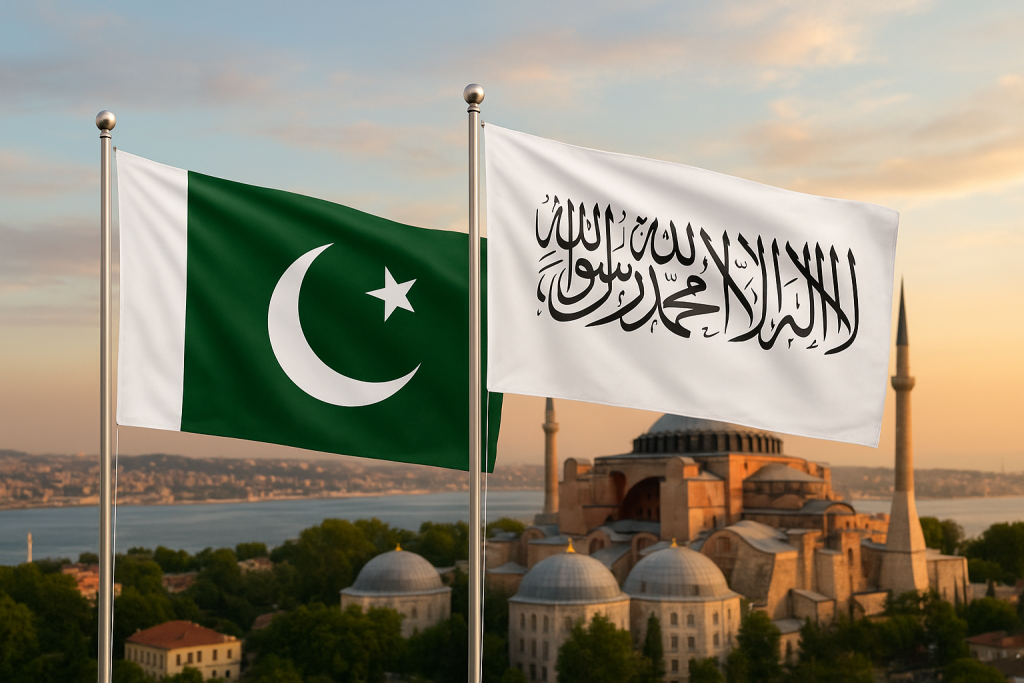
Officials told Associated Press that despite hours of discussions, no tangible results were achieved, with major disagreements persisting over how to address militant groups. Sources close to the Pakistani delegation say Islamabad is angered by the Taliban’s refusal to acknowledge the presence of Tehrik-e-Taliban Pakistan (TTP) fighters on Afghan soil. Pakistan reportedly demanded “verifiable actions” from the Taliban to curb cross-border militancy, insisting that “support for terrorist groups is unacceptable.”
Turkey, which hosted the talks, is attempting to maintain a constructive atmosphere, but the absence of a joint statement and the Taliban’s continued silence suggest the divisions remain too deep to bridge easily.
Meanwhile, Pakistani media have been actively shaping a narrative portraying the Taliban as “stubborn and unreasonable,” using selective leaks from the closed-door sessions. The Taliban, consistent with its usual communication pattern, has avoided disclosing details, limiting its response to vague remarks. Spokesman Zabihullah Mujahid merely stated that the Taliban “supports dialogue and believes that problems should be solved through negotiations,” without elaborating further.
Observers believe the Taliban has “lost the battle of narratives.” While Pakistan is leveraging media diplomacy to reinforce its version of events, the Taliban’s lack of a coherent communication strategy has marginalized its position. Experts warn that this narrative vacuum may damage the Taliban’s international legitimacy and provide justification for possible Pakistani military action along the border.
Reports have also surfaced of a past agreement among the Afghan Taliban, TTP, and al-Qaeda, under which the Afghan Taliban allegedly pledged to support foreign militants in their “jihad” and the establishment of an Islamic system in Pakistan. Such reports have deepened skepticism among regional and international actors about the Taliban’s denials regarding foreign fighters in Afghanistan.
Analysts caution that if the Taliban continues to deny TTP’s presence on its territory, Istanbul talks are likely to collapse — giving Pakistan greater freedom to launch direct strikes against Taliban positions.
In this context, the Taliban’s media silence and failure to shape an effective narrative not only weaken its diplomatic leverage with Islamabad but also reveal its continued lack of modern tools for political communication and legitimacy-building in the regional arena.