Europe’s Streets Rise for Palestine As Protests Surge against Israel
DID Press: Over the past two years, amid the ongoing war and mass killings in Gaza, Europe has witnessed one of the largest waves of protests in its history. What began on the streets has reached parliaments and political parties, gradually reshaping official foreign policy. Reports indicate over 45,000 rallies, marches, and pro-Palestine events in 800 cities across 25 European countries, signaling a clear shift in public opinion toward Israel.
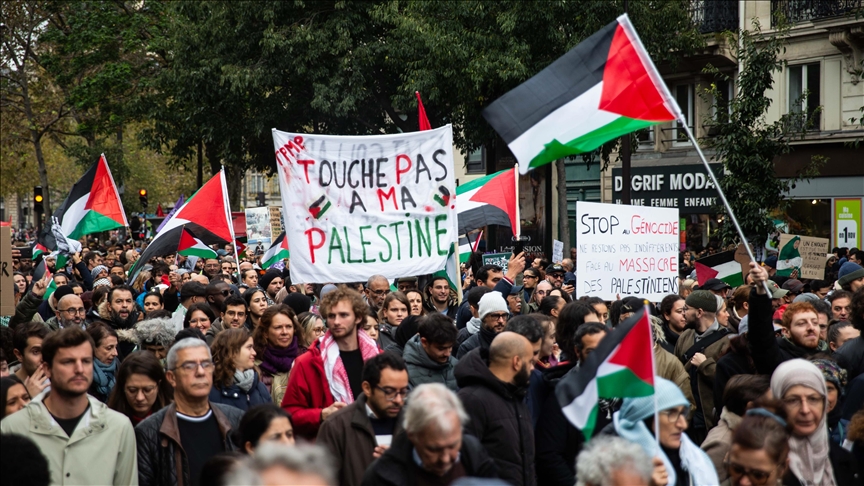
Key Countries Leading the Protests:
Italy: 7,600+ rallies in 186 cities
Germany: 7,000+ rallies
Spain: 5,900+ rallies
Netherlands: a recent protest drew over 250,000 participants, an unprecedented number for the country
This grassroots movement is now influencing official policy: in the past year, 10 European countries formally recognized Palestine, bringing the total to 22 out of 27 EU nations.
Factors Behind the European Uprising:
The Role of Europe’s Left-Wing Movements:
Radical left groups, though smaller, are the loudest advocates for Palestinian rights, emphasizing social justice, migrant rights, and opposition to unrestrained capitalism. Social-democratic left parties support Palestine but adopt milder approaches due to coalition politics, while democratic left parties hold government power but tend to be cautious. The radical left amplified Palestine’s voice, which was popularized further by youth and social media.
The “Generation Z” Effect:
Europeans aged 13–28 are significantly more pro-Palestine than previous generations. Unlike older generations, they rely on live videos, direct broadcasts, and social media rather than mainstream TV. Exposure to the deaths of over 12,000 children in Gaza, combined with European education emphasizing human rights and global justice, has fundamentally shifted youth perspectives. Increased migration post-Arab Spring has also brought Palestine closer to European communities through friendships, universities, workplaces, and social networks.
The Gap Between Streets and Governments:
Countries like Italy, Germany, and the Netherlands host the largest pro-Palestine protests, yet their governments have not fully recognized Palestine. Reasons include:
Right-leaning government coalitions
Europe-Israel trade exceeding €45 billion
Germany’s historical Holocaust legacy influencing foreign policy
Continued U.S. influence over European diplomacy
This gap highlights the historical moment: Europe’s streets support Palestine, but official governments remain constrained by old structures.
In sum, Europe is not just showing emotional solidarity. A new political front is emerging, composed of youth, radical left groups, and civil society. If the Palestinian movement leverages this narrative effectively, it could lead to official shifts in European policies. For the first time since World War II, Europe may be ready to challenge Israeli policies not only in protests but also through formal decisions.
By Mohammad Aloudat