DID Press: Following a meeting between senior US and Chinese defense officials in Malaysia, the two countries have agreed to establish direct communication channels between their armed forces to prevent potential conflicts and manage crises—a move that could open a new chapter in the tense Washington-Beijing relationship.
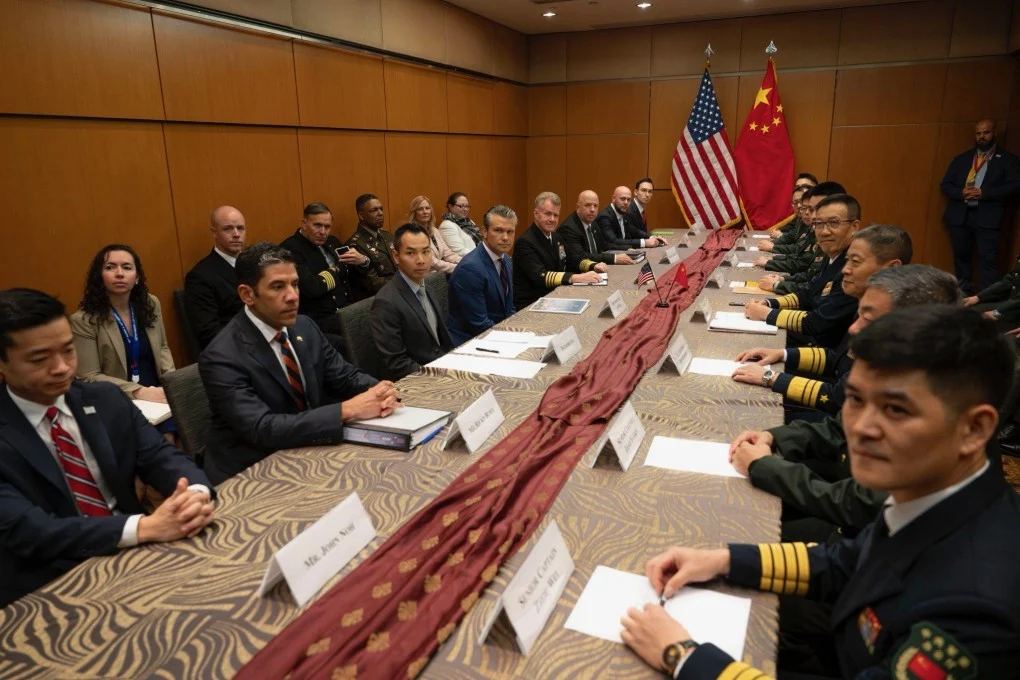
US Secretary of War Pete Hegseth announced on social media that he and his Chinese counterpart, Dong Jun, had agreed to set up these direct military communication channels.
Hegseth explained that the agreement aims to manage crises, prevent military misunderstandings, and reduce the risk of unintended clashes between the two powers.
The meeting follows recent talks between US President Donald Trump and Chinese President Xi Jinping in South Korea, referred to by international media as the “historic G2 meeting.” Trump said after the summit that the discussions marked “the beginning of lasting peace between two major world powers.”
Hegseth added that his discussions with Dong were held in a “positive and constructive” environment, with both sides emphasizing peace, stability, and mutual respect in military and diplomatic relations.
“We agreed to create direct military channels to resolve disputes and prevent escalation. Further sessions will determine the operational mechanisms for these communications,” he said.
According to the US Department of Defense, the two sides also emphasized the need for effective mechanisms to prevent sudden crises and reduce the likelihood of conflict in sensitive areas such as Taiwan and the South China Sea.
This agreement comes amid years of strained US-China military relations, particularly over Taiwan, technological competition, and China’s growing influence in the Asia-Pacific region, which had virtually halted direct contact between military commanders.
Although technical details of the communication channels have not been disclosed, analysts believe the new agreement signals a willingness by the two global powers to rebuild trust and avoid direct confrontation in East Asia.