Taliban Stirs Tensions with ‘Greater Afghanistan’ Map ahead of Pakistan Talks
DID Press: Ahead of the third round of official talks between the Taliban and Pakistan, set to take place soon in Istanbul, Taliban government has published a map titled “Greater Afghanistan” (Loy Afghanistan), which includes parts of Pakistani territory. This move has sparked concern and reactions among political observers and regional media.
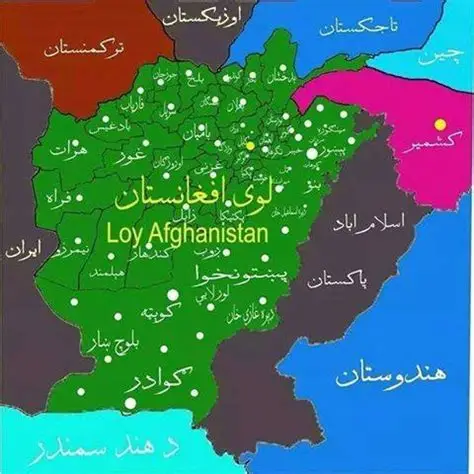
The Taliban recently released a map showing “Greater Afghanistan” that depicts parts of Pakistan—particularly Khyber Pakhtunkhwa and the Pashtun areas across the Durand Line—as integral parts of Afghanistan.
The concept of “Greater Afghanistan” has historical and ethnic roots among some Pashtun groups, who, since the drawing of the Durand Line during British colonial rule, have consistently advocated for the abolition of this border and the annexation of Pashtun-inhabited areas to Afghanistan. The Durand Line has long been one of the most contentious issues in Afghanistan-Pakistan relations.
Experts believe that publishing this map at the present time could exacerbate mistrust and heighten political and security tensions between Kabul and Islamabad. Analysts argue that a significant part of Pakistan’s historical suspicion toward Afghan governments is rooted in such territorial perspectives. Over decades, Islamabad has reportedly supported various groups to maintain a power balance in Afghanistan favorable to Pakistan.
Meanwhile, the third round of official talks between Taliban representatives and the Pakistani government is scheduled for November 6, 2025, in Istanbul, Turkey. The aim of these discussions is to reduce border tensions, review security cooperation, and improve bilateral relations.
The first round of talks took place on October 18 in Qatar and concluded with a temporary ceasefire. During that meeting, the inclusion of the phrase “Durand Line as the official border” in the draft final declaration by the host country triggered a strong reaction from the Taliban government and Afghan political activists and was eventually removed.
The second round of talks was held in Istanbul, but aside from an extension of the ceasefire, it produced no tangible results. The negotiations resumed following deadly border clashes between Taliban forces and the Pakistani army, prompting Qatar and Turkey to act as mediators.
The release of the “Greater Afghanistan” map on the eve of the third round of talks may present a fresh test for the fragile peace dialogue process between Kabul and Islamabad.