4 Israeli Women Draw Criticism Over Role in Gaza Violence
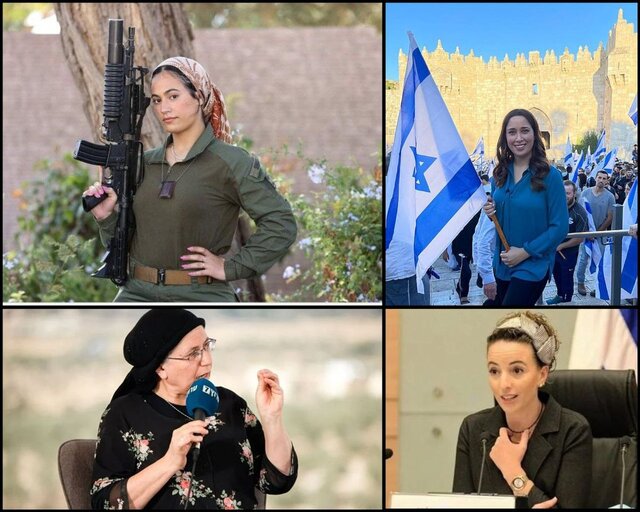
DID Press: Amid Israel’s ongoing military operations in Gaza, women in the country’s political and military spheres are emerging as notable figures in the violence against Palestinians, challenging perceptions that the conflict is driven solely by men. Four Israeli women have been identified for their extreme policies and actions, which critics say have contributed to what they describe as acts of mass violence in the region.
Orit Strook: From Politics to a Controversial Family Legacy
Orit Strook, Israel’s Minister of Settlements, is a staunch advocate for expansionist policies in the West Bank. Her family has also drawn international scrutiny: her son, Zvika Strook, was jailed in 2007 over the alleged abduction and torture of a Palestinian boy, and her daughter, Shoshana, recently accused her parents of childhood sexual abuse. Strook openly supports the eviction of Palestinians from their homes and the expansion of settlements.
Ayelet Shaked: Paving the Way for Netanyahu
Ayelet Shaked, Minister of Environmental Protection and a member of the right-wing Yamina party, played a key role in destabilizing the previous coalition government, enabling Prime Minister Benjamin Netanyahu’s return to power. Shaked has publicly called for the evacuation of all Palestinian residents from Gaza, stating in March 2025 that “the only solution for Gaza is to empty it of Palestinians.”
Meirav Cohen: Controversial Rhetoric in Government Office
Meirav Cohen, Minister of Social Equality and Women’s Affairs, has drawn attention for her inflammatory and racially charged statements. Following the latest military strikes on Gaza, she reportedly said, “I take pride in the ruins of Gaza; no peace, no olives, only the sword to behead the enemies.” Her remarks sparked widespread criticism and social media backlash.
Chanel Zamir: Shadow Commander in the West Bank
Chanel Zamir, a radical settler, recently formed an armed group in the West Bank, allegedly responsible for multiple attacks on Palestinians. Sources in Israel suggest her unit plays an active role in implementing annexation plans in occupied territories. Analysts describe her as a dangerous figure in the militarization of settlements.
These four women, operating at the intersection of politics, military, and ideology, have become symbols of the harsh and uncompromising approach of a regime whose policies have resulted in thousands of civilian casualties and the ongoing displacement of Palestinians.