DID Press: The month-long closure of Torkham border crossing between Afghanistan and Pakistan has caused trade losses exceeding $4.5 billion, according to official sources, who warn that the ongoing stalemate is inflicting irreparable damage on both economies and eroding Pakistan’s traditional dominance in the Afghan market.
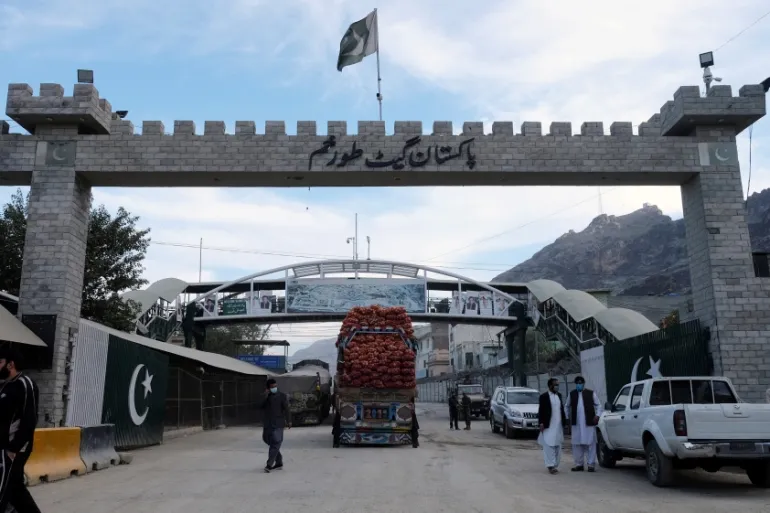
The Pakistani daily Dawn reported that the prolonged shutdown of the Torkham crossing has paralyzed bilateral trade and transit, leading to severe economic disruption on both sides of the border.
Economic analysts say Pakistan’s restrictive trade policies have already cost it more than 65 percent of its share in Afghanistan’s import market. As a result, Iran, Turkey, India, and Central Asian countries have emerged as major alternative suppliers for Afghan traders.
Nazim Gul, a trader and customs agent at Torkham, said that even before the closure, Kabul and Jalalabad markets were already dominated by Iranian and Turkish goods.
“Afghan traders now prefer working with Iran because of easier visa procedures, lower tariffs, and more favorable business conduct,” Gul told Dawn.
Mujeebullah Shinwari, head of the Torkham Customs Clearing Agents Association, urged that Pakistan’s restrictive policies should not be entangled with security or political issues. He noted that bilateral trade volume had dropped from around $2.5 billion (2012–2016) to less than $900 million annually.
According to Shinwari, the number of export trucks crossing daily has fallen from 1,200 to around 250–300, drastically reducing tax revenues and threatening the livelihoods of thousands of drivers, customs agents, and local merchants. He warned that the ongoing situation could prove “catastrophic” for small-scale traders.
Meanwhile, dozens of truck drivers stranded at the border since mid-October have reported heavy financial losses, saying many are considering abandoning their businesses and turning to lower-income work.
Shinwari proposed the formation of a joint jirga of tribal elders, business leaders, and politicians from both sides to directly engage with Kabul and Islamabad authorities in search of a sustainable solution for reopening the border and reviving trade routes.
The Torkham closure followed border clashes between Pakistani forces and the Taliban about a month ago. Four rounds of mediation talks led by Qatar and Turkey have so far failed to produce tangible results.