DID Press: Final results from Iraq’s parliamentary elections show that foreign attempts to influence the country’s political balance were largely unsuccessful, with parties aligned with independence-oriented and resistance movements securing strong positions in the new parliament. A significant rise in voter turnout also reflected Iraqis’ determination to shape their political future.
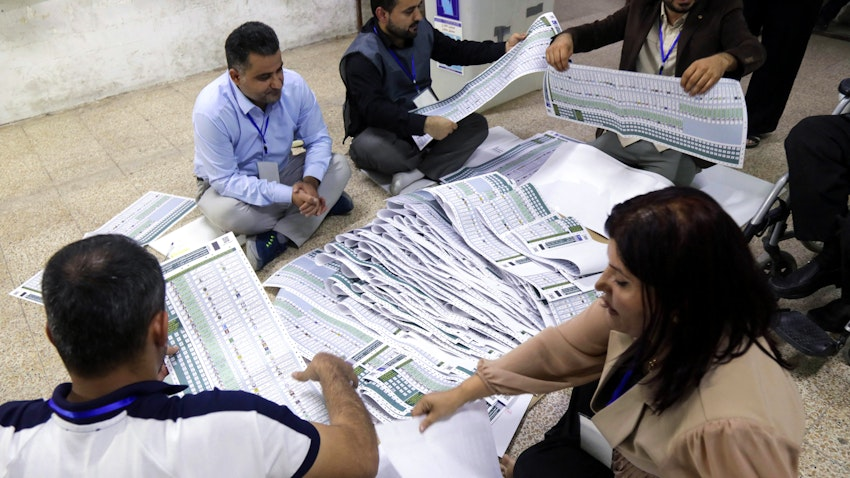
The elections, held with participation from over 12 million eligible voters, saw turnout increase by 12.5 percent compared to the previous cycle, reaching 58 percent. This indicates that the boycott campaigns previously advocated by some groups, including the Sadrist movement, had limited effect on public opinion.
According to the official results:
The Reconstruction and Development Coalition, led by Prime Minister Mohammed Shia al-Sudani, won 45 seats.
The State of Law Coalition, led by Nouri al-Maliki, secured 30 seats.
The Sunni party Taqaddum, led by Mohammed al-Halbousi, obtained 27 seats.
The Sadiqun Movement, led by Qais al-Khazali, earned 26 seats.
Other Sunni and Shia parties, including Badr Organization, Hikma, Azm, and Sayyad, also gained significant parliamentary representation.
Among Kurdish parties, the Kurdistan Democratic Party (KDP) led with 27 seats, followed by the Patriotic Union of Kurdistan (PUK) with 18 seats. Smaller Kurdish parties and alliances collectively secured additional seats, creating a more diverse parliamentary composition.
Strengthening the Role of Popular Mobilization Forces (PMF)
Iraqi media, including Al-Maalomah, reported that the success of resistance-aligned forces increases the likelihood of passing a law that would legally formalize the status of the Popular Mobilization Forces (PMF), a measure previously stalled in parliament under U.S. pressure. Analysts note that Washington had threatened economic sanctions if the legislation were approved, reflecting its efforts to limit Baghdad’s independent security structures. The new parliamentary composition, however, may facilitate the law’s passage.
Following official results confirmed, the legal process will begin to form a government. The elected president must convene the first parliamentary session within 15 days to elect the speaker and deputies. Parliament then has 30 days to elect the president—a post traditionally reserved for a Kurd. The president must nominate the head of the largest parliamentary bloc to form the cabinet, a position traditionally held by a Shiite party.
Analysts warn that forming the new government may encounter challenges similar to those in 2021 due to close competition among political blocs, though the current parliament’s composition presents a notably different landscape.