AfghanistanAnalysisEconomy & DevelopmentGovernmentIranNewsPoliticsSecuritySocietyTrade
Taliban Spokesman Interview with IRIB: From Promises to Reality in Afghanistan
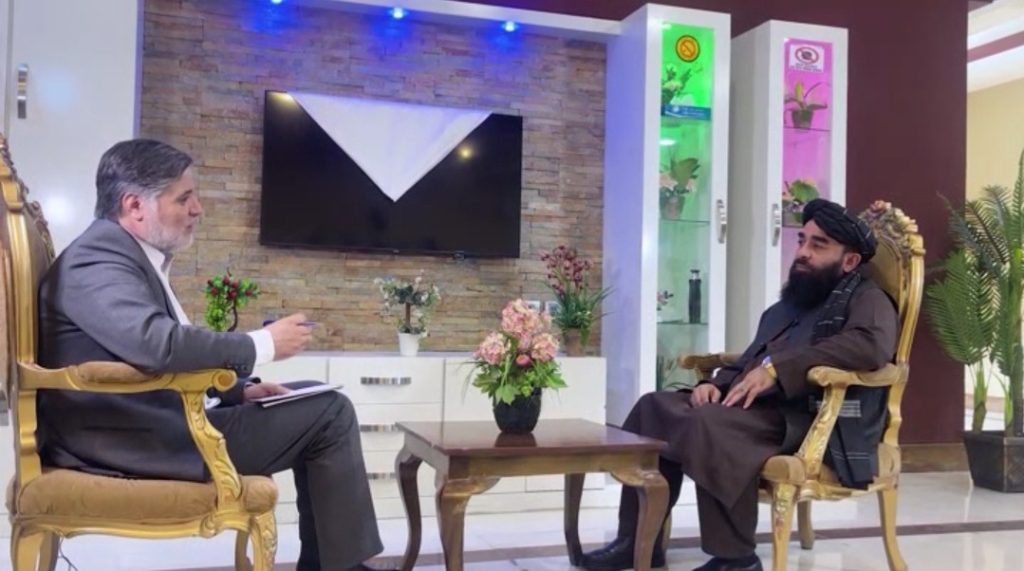
DID Press: Zabiullah Mujahid, spokesperson for the Taliban government, recently gave an interview to Iran’s state media, providing an opportunity to present the government’s positions and claims. However, several key points and evident gaps in his statements raise serious questions and highlight areas for accountability.
- Claim of 70% Government Progress
Mujahid asserted that the Taliban had achieved 70% of its program goals, but provided no verifiable indicators. Lack of attention to human rights, girls’ education, and civil liberties raises serious doubts about this claim. - Need for International Recognition
Mujahid claimed that the Taliban maintains 40 active diplomatic missions worldwide. In reality, only Russia formally recognizes the regime, highlighting a significant gap between claims and actual foreign policy standing, particularly given ongoing human rights concerns. - Condemnation of U.S. Drone Flights
He criticized U.S. drone incursions into Afghan airspace but offered no concrete measures, revealing a weakness in diplomacy and national sovereignty enforcement. - Praise for Iran Hosting Afghan Refugees
While appreciating Iran’s hospitality, the lack of a clear plan for voluntary return and socio-economic support for returnees remains a pressing issue. - Iran–Afghanistan Economic Investment
Mujahid highlighted opportunities for mutual investment, but realizing these potentials requires a robust economic strategy and effective implementation mechanisms based on historical and cultural ties. - Persian Language in Afghanistan
Mujahid emphasized Persian as an official language, a positive statement, but one that must align with political and social realities, where discriminatory policies against Persian speakers persist under Taliban rule. - Role of Media in Bilateral Relations
He criticized Western media for undermining Afghanistan–Iran relations, demonstrating Taliban awareness of foreign influence, while domestic media under Taliban control still engage in censorship and distortion. - Border Security Cooperation
Effective control over borders is lacking, posing regional security risks. Enhanced bilateral security cooperation is essential to avoid repeating issues seen along the Durand Line. - Accountability for U.S. Crimes
Despite criticizing the lack of legal mechanisms to hold the U.S. accountable for past crimes in Afghanistan, no practical actions by the Taliban have been reported. Legal frameworks remain necessary. - ISIS in Afghanistan
Mujahid claimed Taliban control over ISIS activity, yet independent verification is absent, limiting regional trust. - Drug Control
While opium cultivation has decreased, rising industrial drug production indicates a lack of a comprehensive counter-narcotics strategy. - Relations with Pakistan
Contradictions between accusations and calls for cooperation illustrate instability and highlight the need for reliable, institutionalized mechanisms. - Stance on Palestine
Verbal support for Palestine was expressed, but the absence of concrete action over four years raises questions. - Relations with Iran
Although some areas of engagement are positive, challenges remain regarding migration, water, smuggling, and border security. Transparency, accountability, and practical measures are necessary to build real trust.
Conclusion
The interview provides insight into Taliban claims and policies, but the lack of measurable indicators, transparency, and concrete action underscores the need for scrutiny. Regional cooperation, accountability, and adherence to promises are essential for trust-building and sustainable development.