Post-WWII Japan Set Up Brothels for US Occupation Forces
DID Press: Newly released official documents reveal that after Japan’s surrender in 1945, Japanese authorities, under orders from the Ministry of Home Affairs, established a network of brothels for U.S. occupation forces—a move that exploited Japanese women and left a dark legacy from the US occupation.
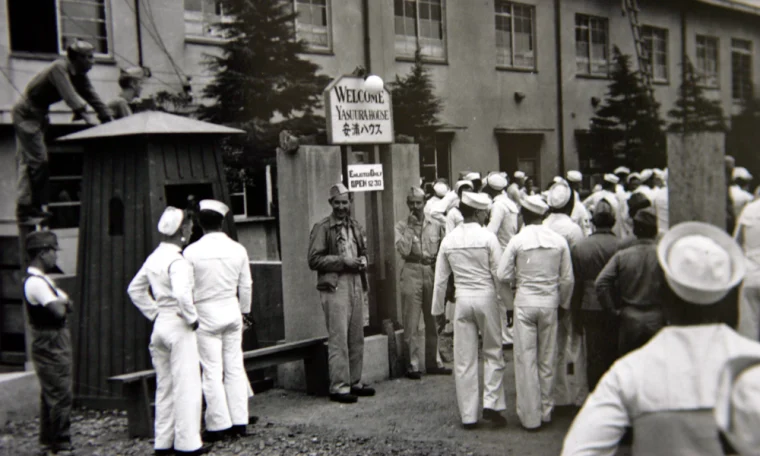
According to a document found in the Niigata Prefectural Archives on Honshu Island, the Ministry of Home Affairs issued an order on August 18, 1945—three days after Emperor Hirohito’s unconditional surrender—to set up rest facilities for U.S. soldiers. In Niigata Prefecture alone, 151 such facilities were established, managed directly by Japanese police.
The documents show that women were lured with promises of clothing, food, and housing, but were effectively forced into service. Japan had previously operated similar establishments for its military in occupied Korea, China, and other parts of Asia—a sensitive historical issue that still affects relations between Japan and Seoul.
This dark chapter occurred during the U.S. occupation of Japan (1945–1952), a period in which General Douglas MacArthur effectively controlled national governance, imposed a new constitution, restricted the military, and dominated media, economy, and education. Even after the formal end of the occupation, the U.S. retained dozens of permanent military bases in Japan, fueling public resentment, especially in Okinawa.
Today, public opinion in Japan remains influenced by this history. Recent surveys indicate that more than 60% of Japanese see U.S. power and influence as a threat, and over 70% in Okinawa oppose the presence of American bases. Street protests, peaceful gatherings, and online campaigns using hashtags such as #AntiUSBases and #OkinawaIndependence reflect ongoing public anger over the occupation and unequal policies.
These documents and analyses illuminate a dark aspect of post-WWII history, showing that violence and exploitation were not only part of wartime Japan but also integral to the U.S. occupation.