TTP, ISIS Pose Major Threat to Regional Security, Warns Denmark at UNSC
DID Pres: Denmark warned the UN Security Council about the “serious threat” posed by Tehrik-e-Taliban Pakistan (TTP) in Central and South Asia, saying the group continues to receive “logistical support” from Afghanistan’s de facto authorities.
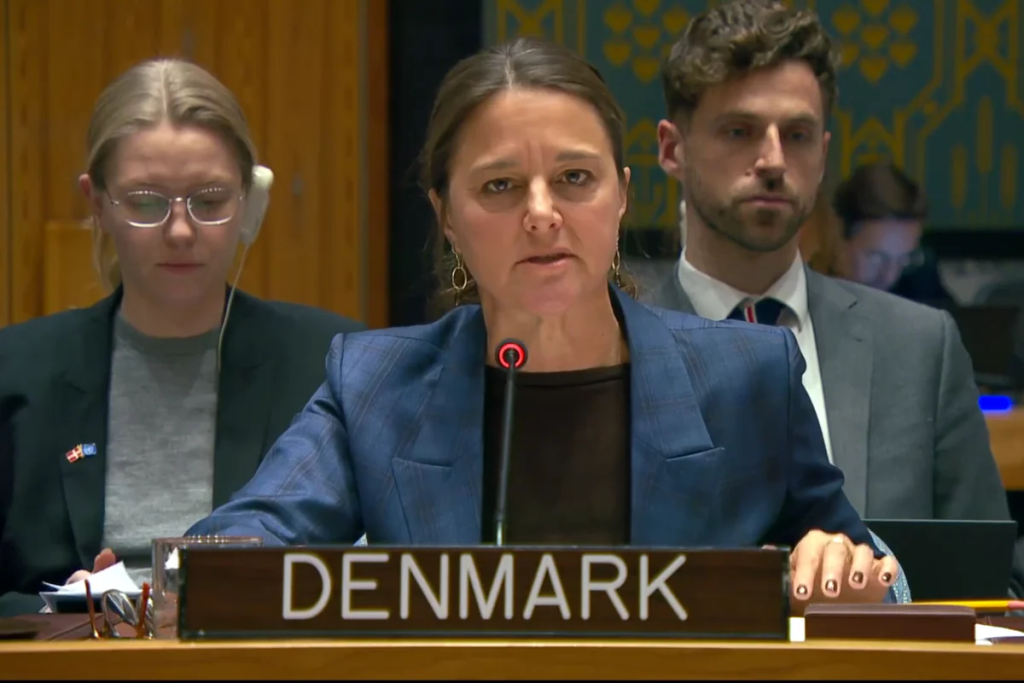
Speaking at Wednesday’s Security Council session—held to review the status of ISIS, al-Qaeda, and their affiliates—Sandra Jensen Landi, Denmark’s Deputy Permanent Representative and Chair of the ISIS and al-Qaeda Sanctions Committee, said the TTP, with an estimated 6,000 fighters, has carried out major attacks against Pakistan from Afghan soil, some resulting in “mass casualties.”
She noted that the presence of TTP militants in Afghanistan has long been a key source of tension between Islamabad and the Taliban authorities in Kabul. Since the Taliban’s return to power in 2021, Pakistan has repeatedly accused them of sheltering thousands of TTP members and enabling a surge of attacks in Khyber Pakhtunkhwa and Balochistan—allegations the Taliban administration has consistently denied.
Landi, citing the latest assessments of the UN sanctions monitoring team, also outlined the evolving threat landscape involving ISIS, al-Qaeda, and affiliated networks. She said their activities are now most intense in Africa, where these groups use social media to glorify violence, recruit youth, and finance operations through cryptocurrencies.
According to Landi, ISIS has redirected its focus toward Africa after losing territory in the Middle East, with branches such as the Islamic State West Africa Province (ISWAP) expanding both their operations and propaganda.
She further warned that ISIS-K (Islamic State Khorasan Province), with roughly 2,000 fighters under the command of Sanaullah Ghafari, remains one of the most significant threats in Central and South Asia, continuing to target Shia communities, Afghan officials, and foreign nationals.
Landi added that the movement of foreign fighters between Syria, Africa, and Central Asia remains a persistent concern for UN member states. She described al-Qaeda’s central leadership as “weakened and marginalized,” but noted that its affiliates—from the Sahel to Yemen—have expanded their influence and financing by exploiting local grievances.
“ISIS and al-Qaeda remain resilient, adaptive, and opportunistic,” she said, warning that the groups continue to exploit regional instability, weak governance, and new technologies to maintain their presence. She stressed that this situation requires “constant vigilance and multilateral cooperation” under the UN’s 1267 sanctions regime.