Iran’s Khorasan Razavi Governor in Herat to Boost Bilateral Trade
DID Press: Following a recent visit by Afghan government officials to the Islamic Republic of Iran, local authorities in Herat province reported that the Governor of Khorasan Razavi Province, Iran, has arrived in the city at the head of a high-level delegation. Previously, the Governor of Herat also led a senior delegation to Mashhad, Iran.
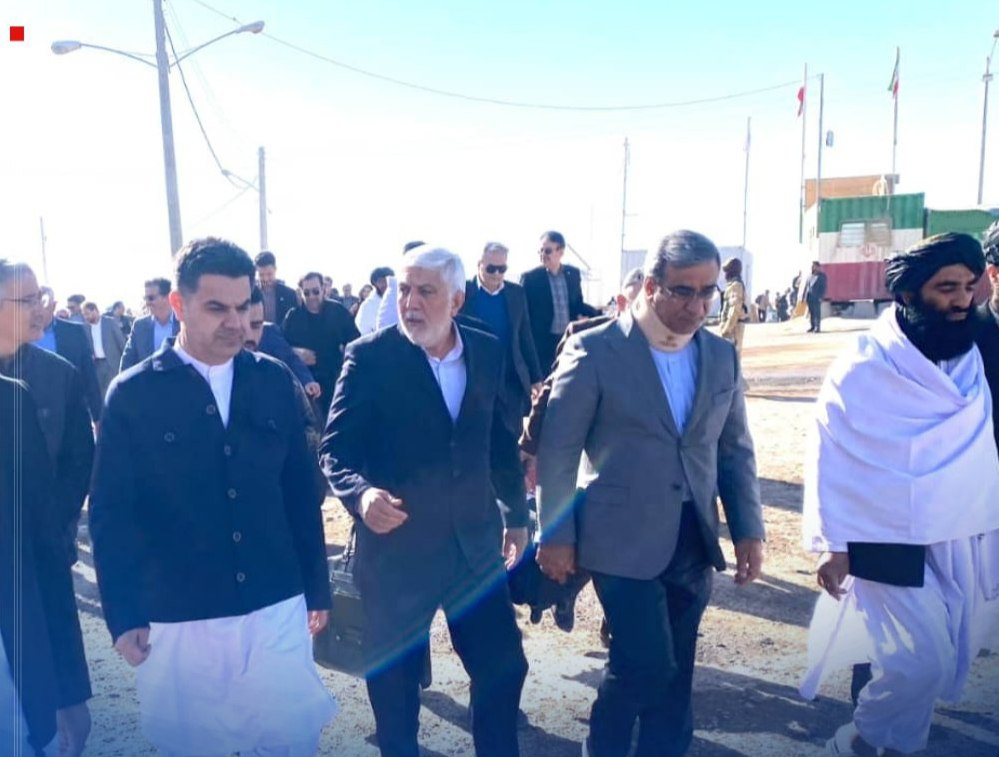
Mohammad Yousuf Saeedi, spokesperson for the Herat Governor, said that the purpose of the visit is to discuss the expansion of trade relations, facilitate cross-border movement at the Islam Qala–Dogharoon crossing, and review previous agreements between the two countries.
The two-day visit, conducted at the invitation of the Herat Governor, includes government officials and private-sector representatives. The Khorasan Razavi delegation comprises 65 members, including economic and commercial actors from Iran.
Ahmad Masoumi‑Far, Head of the Ministry of Foreign Affairs’ Northeast Iran Office, said the discussions will cover transportation, customs and trade issues, as well as cooperation in agriculture, industry, mining, tourism, healthcare, and vocational training.
The delegation visited Dogharoon Customs in Taybad and the Rosank railway station in Khaf district and is scheduled to tour several industrial centers in Herat.
This visit continues the summer trip of the Herat Governor to Mashhad, during which several cooperation agreements were signed and specialized committees were established in industry, mining, agriculture, trade, and vocational training.
Despite efforts to strengthen economic ties, the prolonged detention of Iranian trucks and fuel tankers at Herat and Islam Qala customs has emerged as a major challenge for cross-border trade. Reports indicate that over 2,100–2,500 trucks and approximately 736 fuel tankers have been delayed for more than six months, slowing trade and creating difficulties for merchants and drivers.
Khorasan Razavi’s economic delegation trip to Herat is part of ongoing efforts to enhance economic cooperation, remove trade obstacles, and follow up on previous agreements between the two provinces and countries.