Iran–Afghanistan Economic Convergence Deepens after Talks in Herat
DID Press: A high-level economic delegation from Iran’s Khorasan Razavi province arrived in Afghanistan Herat province, marking a significant step toward strengthening strategic cooperation between the two neighbors. By offering Afghanistan access to the port of Chabahar, Iran has opened an affordable, secure, and geopolitically independent trade corridor that reduces transit costs and enhances Kabul’s economic autonomy in the face of regional pressures.
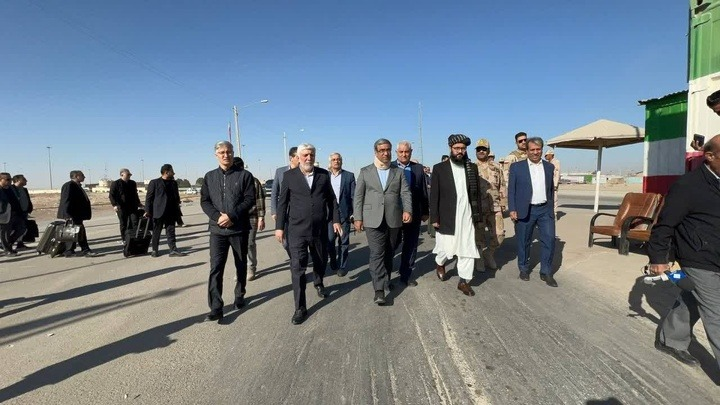
The 65-member delegation, led by Gholamhossein Mozaffari, the Governor of Khorasan Razavi, arrived in Herat on Wednesday, 26 November, following an official invitation from local Taliban authorities. The two-day visit aims to advance and implement previous agreements between Mashhad and Herat, signaling Tehran’s clear determination to deepen long-term economic cooperation with Afghanistan.
The visit comes at a time when Afghanistan urgently needs diversified trade routes and reduced dependency on single corridors. Iran’s offer of full access to Chabahar—along with the growing operational capacity of the Khaf–Herat railway—provides Afghanistan with a vital regional transit artery. The railway alone is expected to multiply cargo flow and reshape Afghanistan’s role in regional commerce.
Iran’s investments in key Afghan sectors extend far beyond trade, with potential to stimulate job creation and transfer technical expertise. Iran’s experience in agro-industry, energy production, manufacturing, and infrastructure development aligns directly with Afghanistan’s most pressing economic needs. Joint industrial zones, mining development, and new power-generation facilities could generate thousands of jobs and weaken the cycle of poverty in border regions—provided that agreements progress from paperwork to practical implementation.
However, to unlock the full potential of this cooperation, existing structural barriers must be removed. Customs bottlenecks, financial restrictions, and security risks along transport routes continue to slow economic activity. Addressing these issues requires swift and coordinated action by both sides.
For the Taliban authorities, creating a stable, predictable environment for foreign investment is essential. A secure and transparent framework will build trust and accelerate economic engagement.
Beyond economics, cultural and historical ties between Afghanistan and Iran remain a strategic asset, capable of strengthening long-term cooperation. Yet ideological rigidity or restrictive policies could undermine these ties and hinder progress. A pragmatic, interest-based foreign policy is needed to ensure that shared benefits outweigh political sensitivities.
Today, Afghanistan needs reliable economic partners with mutual interests. With its capabilities in energy, industry, agriculture, and access to open waters, Iran is well-positioned to serve as one of those partners. The latest visit by the Governor of Khorasan Razavi to Herat is an opportunity to demonstrate that agreements can turn into tangible outcomes. This goal requires continuous follow-up, administrative reform, transparent contracting processes, and credible guarantees for investors.
If both sides act with unified determination, their growing economic alignment could become a model for regional cooperation—bringing greater stability and prosperity to the broader region.
By Ahmad Zaki Navisa – DID Press Agency