Rising Tajikistan–Afghanistan Border Tensions Expose Central Asia’s New Geopolitical Fragility
DID Press: Increasing targeted attacks along the Afghanistan–Tajikistan border, the growing activity of smuggling networks, and Russia’s renewed security involvement have pushed Central Asia into a sensitive geopolitical phase—one in which security has become the driving force behind economic and diplomatic decisions.
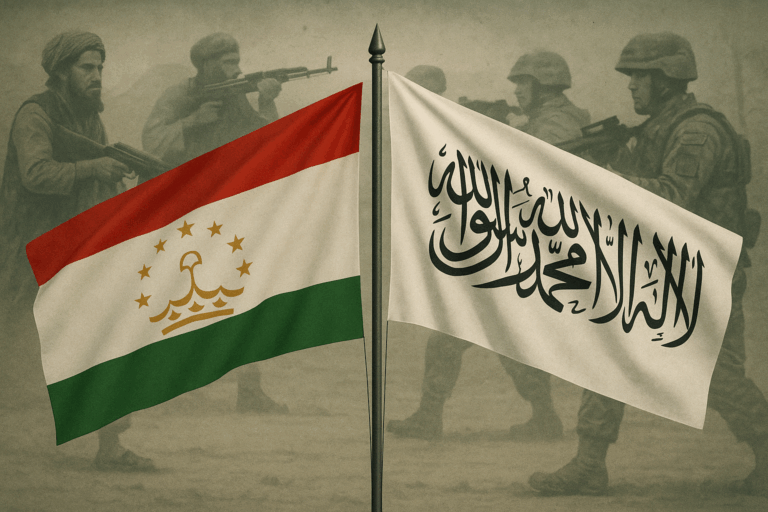
A new analysis by Turkey Today argues that escalating tensions between Afghanistan and Tajikistan have once again made Central Asia a focal point for regional and international actors. A series of attacks against Chinese workers in Badakhshan, intensified activity by organized smuggling networks, and cross-border movements by extremist groups have elevated Dushanbe’s security concerns to their highest level in years.
The report notes that Tajikistan’s recent cooperation with Russia—including the resumption of joint patrols, aerial support missions, and broad military coordination—shows that the crisis has moved beyond a bilateral dispute and evolved into a regional issue with the potential to reshape the balance of power in Central Asia.
Regional Fallout and Threats to China’s Projects
Recent attacks launched from Afghan territory into Tajikistan, which resulted in the deaths of several Chinese nationals, highlight a rapid erosion of stability along one of the most sensitive geopolitical frontiers in the region. These incidents have exposed the vulnerability of China’s key mining, energy, and infrastructure projects, placing the Belt and Road Initiative under serious threat.
Beijing’s formal warning advising its citizens to leave border areas signals that insecurity in Badakhshan is not merely a local challenge—it threatens the broader process of regional economic integration.
Russia’s Strong Return to the Security Architecture
According to Turkey Today, the border crisis has given Moscow a rare opportunity to redefine its security role in Central Asia. Discussions about joint patrols, deployment of additional forces, and provision of air support indicate that Russia’s involvement has shifted from diplomatic engagement to active operational measures.
The Collective Security Treaty Organization (CSTO), which Moscow describes as a “security pillar of a multipolar world,” is now undergoing a real test. Enhanced intelligence sharing and the revival of border operations are transforming the CSTO from a consultative body into an active security actor.
Central Asia Enters a Three-Layer Security Orbit
The analysis concludes that Central Asia has entered a period of geopolitical fragility shaped by three overlapping layers of security:
Russia’s operational security umbrella and the CSTO
Regional diplomatic coordination through the Afghanistan Contact Group
The on-the-ground reality of the Taliban as the force controlling Afghanistan’s southern borders
Tajikistan sits at the center of this three-tiered security dynamic, becoming the point where regional power sensitivities are more visible than ever.
Conclusion
According to the report’s author, Central Asia is not merely facing a border crisis—it is on the verge of redefining its entire security architecture. This strategic turning point may shape the geopolitical future of the region for years to come.