Potential Closure of Afghanistan’s Embassy in Australia
DID Press: Following announcement of Afghanistan ambassador’s credentials will not be renewed in Australia, thousands of Afghan migrants are expressing concern over the future of consular services and their rights.
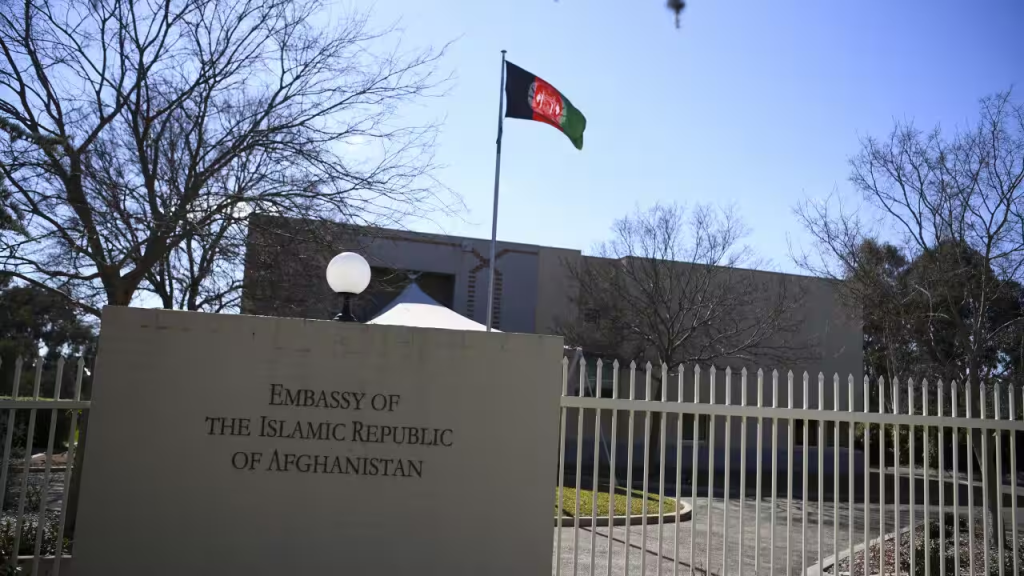
Afghanistan citizens residing in Australia are reportedly in a state of uncertainty and anxiety after hearing about the potential closure of Afghanistan’s embassy in Canberra.
These concerns intensified when informed sources revealed that the Australian government had notified Wahidullah Waisi, the ambassador appointed by Afghanistan’s former government, that his credentials would not be renewed in February.
Waisi, who has served as Afghanistan’s ambassador to Australia since 2017, continued to operate the embassy in exile following the fall of Kabul and the Taliban’s takeover.
Until the Taliban’s July 2024 decision to reject documents issued by embassies of the former government, the embassy provided regular consular services, including the issuance of passports and visas. Following this decision, however, these services have effectively ceased.
Ali Sarwari, head of the travel agency Bamyan Air Travels, which collaborated with the embassy, said that no documents have been issued through the embassy since the Taliban’s announcement. “Even if they issue documents, they are useless due to not being recognized,” he added.
Meanwhile, Fatima Payman, an independent Afghan-Australian senator, described the potential closure as a “second fall of Afghanistan,” emphasizing that the Afghan community in Australia does not accept such a decision. She criticized the silence of both the government and the embassy, noting that it has heightened the anxieties of migrants.
Ambassador Waisi has so far declined to comment or provide any information regarding the future of the diplomatic mission, leaving the Afghan community in Australia in continued uncertainty.
Currently, the only option for obtaining official documents is through representatives of the Taliban government, a prospect that is particularly alarming for many Afghans, especially asylum seekers.
William Maley, a professor at the Australian National University, warned that establishing official relations with the Taliban could endanger individuals who have fled their government.
Australia’s opposition party has also rejected any possibility of recognizing the Taliban government, describing it as “a violent and repressive regime.”
Currently, neither the federal government nor the Afghan embassy has clarified the future of diplomatic relations in Australia, leaving the Afghan community with unanswered questions and an uncertain future.