From Security to Economics: Taliban Welcome Araghchi’s Regional Stance on Afghanistan
DID Press: Remarks by Iranian FM Sayed Abbas Araghchi at a regional meeting in Tehran, emphasizing the need to integrate Afghanistan into regional economic and transit networks, were welcomed by officials of the Taliban-led government—highlighting, however, a persistent gap between Kabul’s cooperation-oriented rhetoric and its diplomatic conduct.
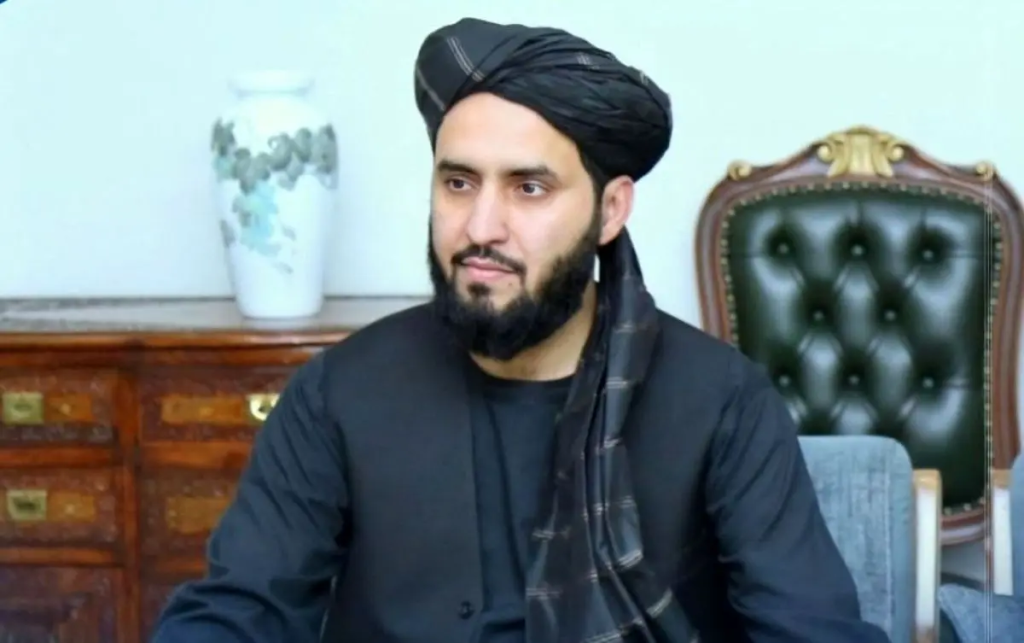
Zakir Jalaly, Second Political Director at the Taliban’s Ministry of Foreign Affairs, said in a post on X that moving beyond purely security-driven approaches and focusing on Afghanistan’s geoeconomic potential is essential for building a stable regional future. According to him, Afghanistan should no longer be viewed as a crisis-management case, but rather as a potential connectivity hub linking Central, West, and South Asia under the current government’s economy-focused foreign policy.
Referring to the pre-2021 period marked by foreign military presence, Jalaly argued that a paradigm shift from security to economics would benefit not only Afghanistan but also the collective interests of neighboring countries. He welcomed Araghchi’s comments at the opening of the Tehran meeting, describing them as “worthy of attention.”
The regional conference brought together special representatives from Iran, Pakistan, China, Russia, Uzbekistan, Tajikistan, and Turkmenistan. Araghchi described the region’s future as “inseparable from Afghanistan’s future,” stressing that no extra-regional formula could resolve the country’s challenges. He argued that neighboring states are the most natural and effective actors in supporting Afghanistan’s stability, and that its integration into regional transit and economic frameworks is a strategic necessity.
Despite this approach, the Taliban did not attend the Tehran meeting, despite having received an official invitation. Mohammad Reza Bahrami, Director General for South Asia at Iran’s Foreign Ministry, said the absence had no negative impact on bilateral relations, reaffirming Tehran’s commitment to Afghanistan’s political and economic integration into regional structures—while noting that Taliban participation could have accelerated the process.
The Taliban government explained its absence by arguing that it already maintains active relations with regional countries through existing cooperation frameworks and sees no urgent need to participate in such meetings.
However, some regional observers view this decision as evidence of a disconnect between the Taliban’s stated support for regional cooperation and their practical engagement in multilateral diplomacy—a gap that could complicate efforts to position Afghanistan as a (hub) of regional cooperation.