Machines at Service of Human Decision—or Threat to Humanity?
DID Press: As artificial intelligence and machine-based decision systems advance at unprecedented speed, fundamental questions are emerging about accountability, technological dominance, and the role of humans in decision-making. Are machines truly a threat to humanity—or does the real concern lie elsewhere?
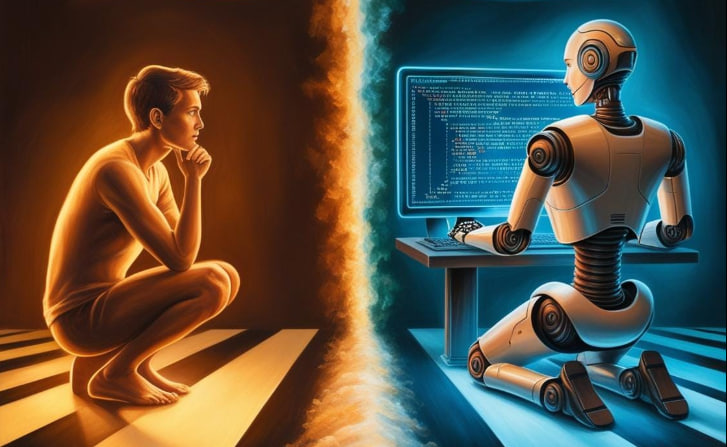
Hardly a day passes without a technological development raising new philosophical questions about the relationship between humans and machines—from artificial intelligence threatening traditional jobs to autonomous weapons capable of planning and executing military operations.
The impact of intelligent machines on human society can be examined through two core dimensions.
The first is accountability. When machine-driven decisions lead to harmful outcomes, who bears responsibility? Algorithms, models, and automated systems increasingly shape decisions, yet they themselves cannot be held accountable. Even today’s technologies allow many decisions to be derived through mathematical and logical models, but these abstractions assume no moral or legal responsibility. As a result, the fundamental question—who answers for the consequences?—remains unresolved.
A historical perspective reveals that much of what is now attributed to machines is in fact the continuation of organizational trends that emerged after the world wars. In an effort to reduce chaos and unpredictability, humans designed standardized procedures and bureaucratic systems that gradually diminished individual agency in decision-making. Automation and artificial intelligence are extensions of this trajectory, not a rupture from it.
The second concern—the domination of machines over humans—is far less plausible in practice. Technological development is inherently dependent on human labor, capital, energy resources, and political-economic structures. Every technological decision ultimately reflects human choices: what to develop, how to deploy it, and for whose benefit. This structural dependency prevents machines from achieving true autonomy or independent dominance over humanity.
What is genuinely troubling, however, is the dominance of narratives that frame the adoption of specific technologies as inevitable or indispensable. Such narratives can be deeply damaging to societies that consume them uncritically. The real danger does not stem from machines themselves, but from the unquestioned acceptance of technological models—much like the uncritical adoption of certain social arrangements—that can lead to alienation and the erosion of human agency.
Ultimately, humanity retains its decisive advantage: unpredictability. No algorithm or artificial intelligence can fully anticipate how humans will act when they choose to disrupt routines, reject imposed frameworks, or redefine priorities. This enduring capacity for disruption and choice remains the strongest counterweight to fears of machine domination.