Tehran Talks Highlight Regional Push on Afghanistan without Taliban Presence
DID Press: The statement issued after the Tehran meeting on Afghanistan reflects a cautious yet active regional approach to addressing the country’s ongoing crises. The meeting, attended by representatives of Iran, Pakistan, China, Russia, Tajikistan, Uzbekistan, and Turkmenistan, was held without the participation of the Taliban and emphasized regional convergence and locally driven solutions rather than external intervention.
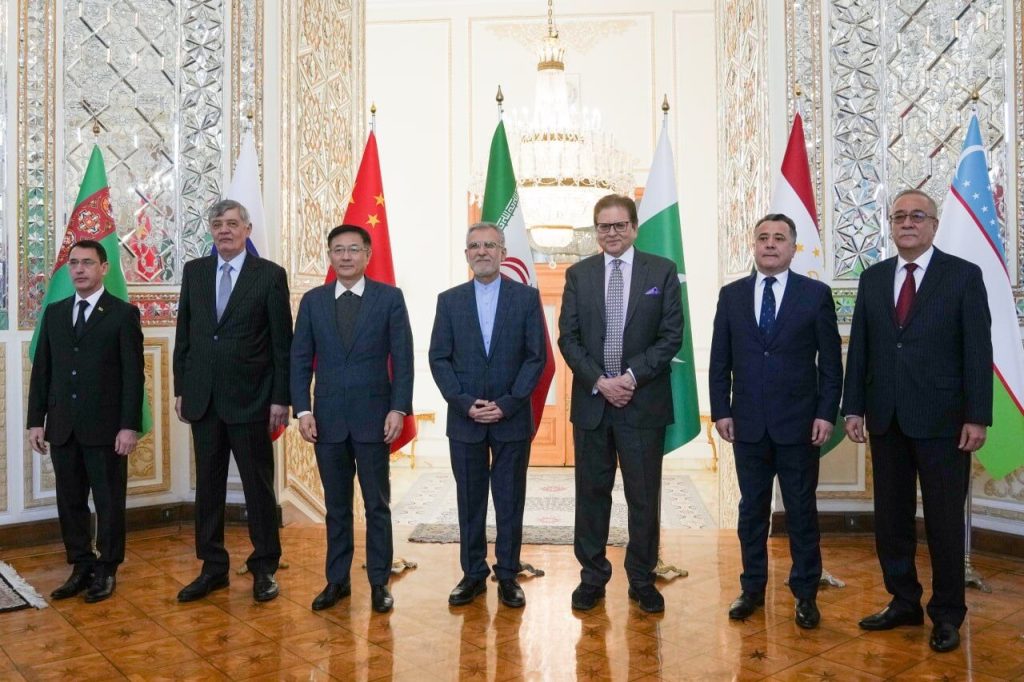
The joint statement outlines a framework for coordinated regional engagement and conditional support for Afghanistan, recognizing that developments in the country have direct implications for regional security. It highlights the key role neighboring states seek to play in managing instability and promoting long-term stability.
Key points of the statement include:
Regional convergence: Participating countries stressed the importance of collective regional action and the central role of neighboring states in addressing Afghanistan’s challenges. They argued that locally grounded, regionally led solutions are more effective than foreign interventions.
Conditional support: The statement expresses readiness to assist Afghanistan’s stability if requested by the Afghan side, reflecting respect for Afghanistan’s decision-making while avoiding unconditional political legitimization of the Taliban.
Security and counterterrorism: Emphasis was placed on cooperation against terrorism, drug trafficking, and human trafficking, alongside opposition to any foreign military presence. The statement also recalls the international community’s responsibility to unfreeze Afghan assets and ease sanctions.
Active diplomacy and de-escalation: The participants underlined the need to reduce tensions—particularly between Afghanistan and Pakistan—and promoted dialogue and diplomatic mechanisms as the primary tools for managing cross-border challenges.
Economic development and regional integration: The statement highlighted the importance of maintaining economic and trade relations with Afghanistan, linking political stability to economic development and improved livelihoods, as well as facilitating investment and mitigating the impact of sanctions.
Overall, the Tehran statement represents an effort by Afghanistan’s neighbors to establish a coordinated, long-term regional framework focused on political stability, security, and economic development. The absence of the Taliban, the emphasis on conditional engagement, and the focus on diplomacy and regional ownership signal a pragmatic but restrained regional strategy. This initiative not only sends a message to the international community but also outlines a pathway for sustained regional involvement in Afghanistan’s future, with potential positive implications for security and development across South and Central Asia.
By Solaiman Saber – DID Press Agency