Afghan, Pakistani Clerics Signal De-escalation in Border Tensions
DID Press: A recent gathering of Afghan clerics in Kabul, presented publicly as a religious and social forum promoting peace and restraint, has also served as a platform for conveying indirect political messages to Pakistan and other regional actors, analysts say.
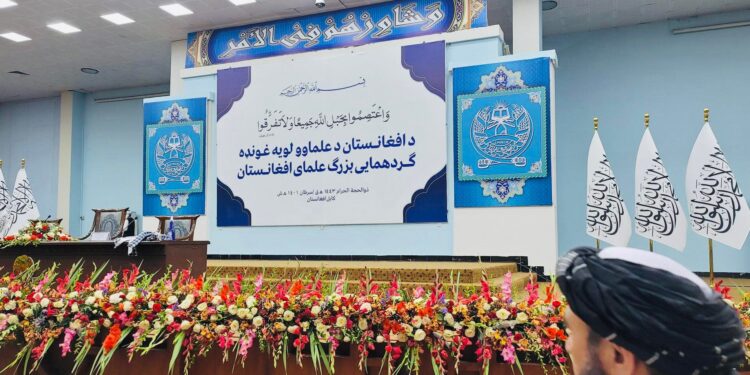
The final resolution of the meeting emphasized two key points: halting violations of Afghanistan’s territory and avoiding retaliatory attacks. Observers interpret this as a signal to Islamabad that the Taliban seek stability along shared borders and a reduction in bilateral tensions.
In response, Pakistan’s Council of Clerics welcomed the Kabul resolution and stressed the need for its implementation by the Taliban authorities. The council described the alignment of religious leaders in both countries as a positive step toward regional peace.
Analysts note that Pakistan’s reaction represents a form of implicit diplomatic messaging, using religious and social institutions to signal both support for border stability and deterrence against potential security threats. The response combines an offer of cooperation with a warning against renewed instability.
The two core elements of the Afghan clerics’ resolution—preventing cross-border violations and refraining from reciprocal attacks—are seen as particularly significant for Pakistan’s border security. At the same time, the Taliban’s indirect message appears aimed at gaining legitimacy and easing tensions, a message that has been reinforced by the response from Pakistani clerics.
The coordinated positions of religious figures in both countries underscore the role of non-state and religious actors as tools of soft power, capable of shaping dialogue, cooperation, and political signaling while exerting pressure when needed.
The Pakistani clerics’ acknowledgment of potential mediation by third countries, including Turkey, Qatar, and Saudi Arabia, points to a multilateral approach to managing regional crises. This reflects the expanding role of religious institutions beyond domestic affairs into regional security and diplomacy.
Warnings against criticism of Pakistan’s armed forces and declarations of readiness by religious schools and mosques to defend the country further highlight Islamabad’s use of religious networks as a means of deterrence and crisis management along the Afghan border.
At the same time, calls for political maturity and condemnation of inflammatory language in politics form another aspect of the council’s message, emphasizing social cohesion and dialogue among Pakistan’s internal political actors.
Overall, while the Afghan clerics’ gathering appeared religious in nature, it effectively facilitated indirect communication between the Taliban and Pakistan. The response from Pakistan’s Council of Clerics illustrates how religious institutions are being employed as instruments of soft diplomacy, deterrence, and strategic messaging.
From the council’s perspective, the future of regional peace involving Afghanistan depends on constructive engagement, religious guidance, and multilateral cooperation, positioning clerics as influential actors in both regional security and political stabilization.
By Sulaiman Saber — DID Press Agency