Zohran Mamdani Facing 3-Front Battle against Wall Street, Trumpism, and Israel Lobby
DID Press: What began as Zohran Mamdani’s urban promises—food subsidies, free infant care, and rent stabilization—quickly escalated into a full-scale battle with an intertwined network of financial, ideological, and geopolitical power.
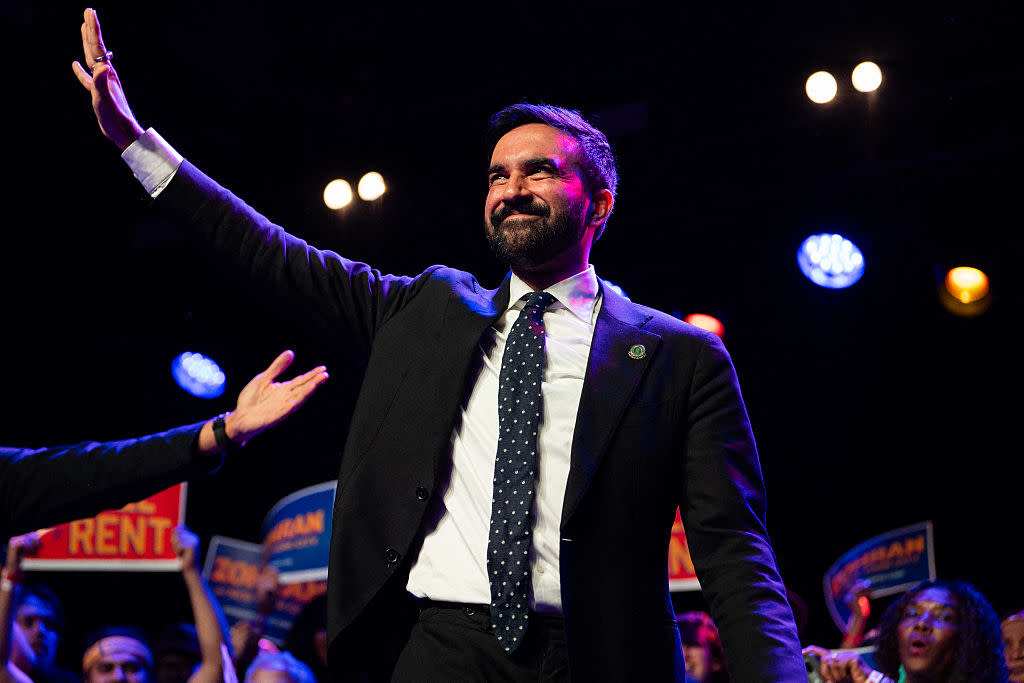
From City Politics to Structural Confrontation
Mamdani’s economic promises initially appeared as a social-democratic approach to New York’s livelihood crisis. However, two key positions transformed his campaign:
Opposition to New York’s $39 million investment in Israeli bonds, directly challenging the financial-political network supporting Tel Aviv.
Readiness to enforce an ICC ruling against Benjamin Netanyahu if he entered the city, blurring the lines between local politics and international legal norms.
From that point, the issue was no longer a “municipal budget” matter but a direct challenge to the connections of Wall Street, Trumpist right-wing politics, and the Israel lobby.
Front One: Trumpism and Internal Enemy Engineering
The first attack line was ideological. The Trump camp framed the economic dispute as an identity battle, portraying Mamdani as the “dangerous other”: a communist, anti-private property, pro-police-budget cuts, and accused of “anti-Jewish statements.”
Deliberate name distortion, threatening headlines in the New York Post, “expel” T-shirts, and claims of electoral fraud on social media were used to delegitimize Mamdani politically before his administration began. Islamophobia and McCarthyism were central tools to depict him as “un-American.”
Front Two: Israel Lobby and Old Democratic Guard
The second front merged ideological opponents and intra-party rivals. Diplomatic concerns in Israel quickly mobilized media campaigns, reminiscent of Jeremy Corbyn’s experience in the UK.
Accusations of “anti-Semitism” were weaponized politically to sever Mamdani from moderate Democrats. Figures like Eric Adams and Andrew Cuomo, in near-far-right rhetoric, emphasized the “Islamist extremism” threat. Visual exaggeration of religious appearance was also used as an “othering” tactic.
The goal: frame criticism of Israeli policies as a threat to “social security” and isolate Mamdani’s economic project.
Front Three: Financial Warfare and Oligarchic Divide
Behind the ideological fronts, the main battle was financial. Investigations revealed dozens of conservative billionaires spending millions to halt Mamdani’s campaign, funding the media and political machinery of the first two fronts.
Conversely, Mamdani also relied on grassroots support and some “progressive capital,” coming from tech and emerging hedge funds, which served as a shield against Trumpism. This created a split within the oligarchy: conservative capital threatened by wealth taxation and halting Israeli bonds versus progressive capital with different cultural and political priorities.
Beyond a Municipal Election
Ultimately, Mamdani’s struggle was not about food subsidies or rent control; it was a multi-front war against extreme nationalism, geopolitical lobbying, and financial oligarchy. His campaign’s success stemmed from a rare alliance of radical identity politics and complex financial arrangements.
The main question now is not electoral victory but whether this governance model can continue—a model attacked by Fox News as “Soros money” and by Wall Street as “dangerous socialism.” Its outcome will shape not only Mamdani’s future but also the urban radical left and the role of Muslims in Western politics.