DID Press: Sheikh Wahab Ghazal, head of the Supreme Islamic Alawite Council in Syria and the diaspora, stated that symbolic and media-driven meetings, without international guarantees and responses to fundamental demands, cannot secure Syria’s political future or protect the rights of Alawites.
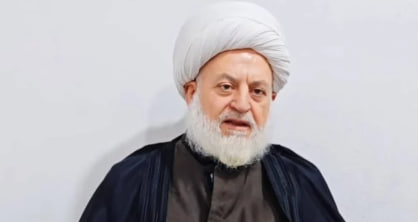
In an interview with Kardel magazine, Ghazal described previous initiatives presented to Alawites as “neither genuine political dialogue nor meaningful,” but rather “worn-out, imposed performances” aimed at subjugating the Alawite community and improving the image of the other party before the international community. He emphasized that such approaches are unacceptable without full citizenship guarantees for Alawites.
Ghazal stressed that any future political negotiations must be backed by international guarantees and based on political federalism. Key preconditions include the release of thousands of forcibly disappeared prisoners, cessation of killings and human rights violations, and progress toward a pluralistic, decentralized constitutional process. He noted: “Superficial meetings without real value cannot replace fundamental solutions.”
Drawing on the experience of countries emerging from bloody civil wars, Ghazal described federalism as “a solution to prevent the repetition of violence,” and said international actors supporting this approach aim to resolve the Syrian conflict while respecting the right to self-determination and local autonomy.
He also highlighted the continued commitment to peaceful strategies and public mobilization for achieving political goals, asserting: “The rejection of these demands by the current regime reveals its authoritarian nature. Ultimately, it is the will of the people, not the ruling power, that will determine the outcome.”
Ghazal noted that federalism is an existential matter influenced by internal, regional, and international factors, stressing: “This decision is neither unilateral nor hasty, but we are responsibly working to accelerate the path to salvation, especially in light of serious violations against Alawites.”
Calling for active international involvement, he said: “Resolving the Syrian crisis cannot rely on the promises of a single country. There must be an understanding among influential nations that secures their interests while aligning with our legitimate demands.” He expressed hope that democratic governments would support the right of Alawites and other Syrian groups to self-determination.
Concluding, Ghazal warned that continued provocations and violations could push Syria toward violence, asserting: “The accusation of attempting to divide the country should fall on those whose exclusionary policies and continuous rights violations are driving Syria toward civil war.” He described federalism as a “path to stability and prosperity,” citing examples such as the United States and the United Arab Emirates.