Why Washington Sidelined Venezuela’s Opposition and Moved Closer to Delcy Rodríguez
DID Press: Recent assessments in Washington indicate that, after months of review, the United States has concluded that Venezuela’s opposition lacks the operational capacity required for a genuine transfer of power. As a result, Washington has shifted toward a path of direct engagement with Delcy Rodríguez and the core leadership of the current government.
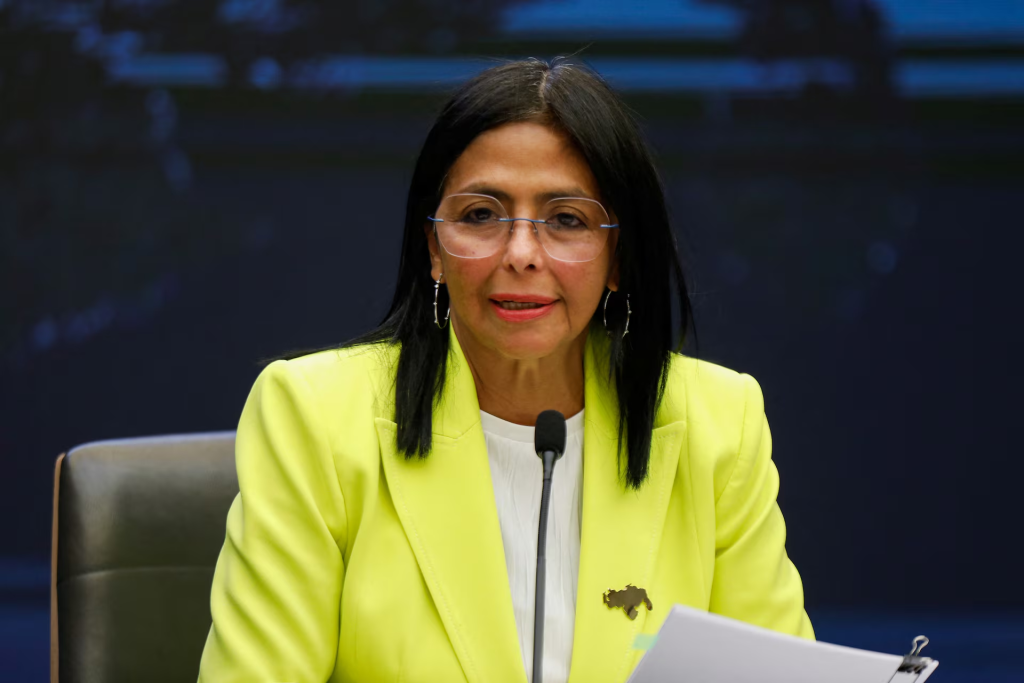
Analytical reports from sources close to the negotiations suggest that Delcy Rodríguez and Venezuela’s inner circle of power are now engaged in direct talks with the United States. Contrary to initial perceptions, this shift is not a sudden change but the outcome of months of evaluation in Washington.
According to these assessments, the U.S. government has determined that María Corina Machado and the opposition movement do not possess the practical ability to seize and sustain power within the country’s real governing structure. They neither control the military nor have they succeeded in creating a meaningful split within it. From the perspective of U.S. officials, had such capacity existed, a transfer of power should have occurred immediately after the 2024 elections—but it did not.
In recent months, U.S. officials—including Marco Rubio—have remained in continuous contact with Machado and her team, repeatedly urging them to present a clear and executable plan for governing the country. Washington sought something beyond a “symbolic victory”: a concrete framework encompassing command structures, military coordination, institutional control, and day-after governance. The responses, however, were vague and unsupported by operational evidence. From that point onward, in Washington’s view, the opposition began to resemble less a reliable path for transition and more a political gamble lacking executive backing.
The plan currently under consideration centers on Delcy Rodríguez playing a role—backed by the United States—in stabilizing the situation, followed by holding of general elections. Washington presents this approach not as an endorsement of the existing government, but as a strategy for containing the crisis and managing a transition. U.S. officials emphasize that this is not an equal partnership: the process is directed by the United States, coordination is channeled through Rubio, and the leverage is entirely asymmetrical. Within this framework, Delcy is viewed as an executive instrument rather than the center of decision-making.
According to Washington’s assessment, Delcy Rodríguez’s recent harsh rhetoric and hardline public positions are aimed primarily at the domestic Chavista base rather than external audiences, and are interpreted as part of internal public-opinion management. Despite this domestic messaging, behind-the-scenes talks between Delcy Rodríguez and U.S. officials continue, and Washington appears to regard this track, for now, as the most effective option for controlling the situation in Venezuela.
Ultimately, the natural consequence of the overt intervention of the U.S. military in Venezuela and Washington’s crossing of all red lines of international law—from violations of national sovereignty to complete disregard for the principle of non-use of force—can only reproduce a familiar historical pattern: the transformation of an independent country into a territory under the influence and direct control of an intervening power.
What is unfolding in Venezuela today is not a limited military operation, but a clear return to the logic of classical colonialism—the same pattern seen in centuries-old wars in which major powers, under security or humanitarian pretexts, seized and plundered strategic resources and engineered political structures. If this process is not contained, Venezuela is effectively on a path toward becoming a modern U.S. colony—one governed not by flags or military governors, but through new mechanisms of influence, political management, and domination over vital resources.
International Desk – DID Press Agency