US Maduro Arrest Shakes Global Strategy: Beijing, Moscow Reassess America’s Role
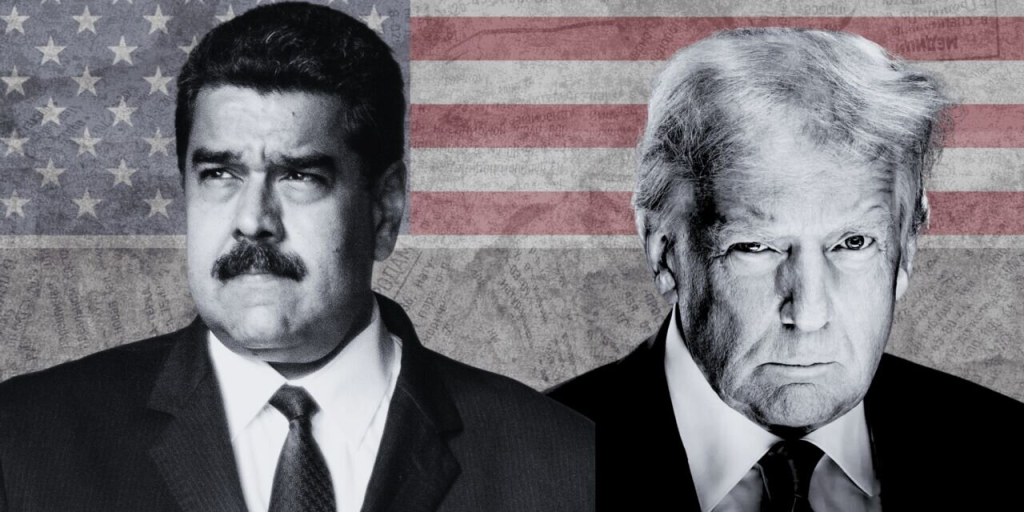
DID Press: The rapid US raid on Caracas and the arrest of Venezuelan President Nicolás Maduro has not only disrupted Latin American dynamics but also prompted questions in Moscow and Beijing about whether Washington is redefining its global role and returning to a regional dominance strategy—a shift that could have deep implications for the emerging multipolar world order.
In 1989, US forces fought for two weeks to locate and arrest Manuel Noriega in Panama—a costly operation that killed dozens of Americans and hundreds of Panamanians, in a small country where the US already maintained extensive military presence. With this historical precedent, many analysts expected the operation in Venezuela—a vast country with a large army and a network of loyal militias—to resemble Iraq, where locating Saddam Hussein took months and regime change led to chaos, bloodshed, and a blow to Washington’s global credibility.
However, the recent US operation in Caracas surprised many observers. President Trump appears to frame the action as a demonstration of power, asserting that the United States still possesses the capacity to enforce its will globally. Naturally, such a swift raid has raised concerns in Moscow and Beijing, key supporters of Maduro, especially given that Washington neutralized a major anti-American network in South America with unexpected ease.
Still, in both capitals, some officials interpret the operation as evidence of the US limiting its global ambitions. From their perspective, Trump is pursuing regional dominance through limited operations rather than global hegemony—from targeted strikes against ISIS in Nigeria to Houthi forces in Yemen, and short but highly publicized actions against Iran’s nuclear program.
The release of the US National Security Strategy in early December further reinforced this view. The document formalizes a shift toward influence-based geopolitics and a transactional “America First” worldview. Advisors to Putin and Xi are likely to argue that Trump prefers to engage weaker adversaries, has shown restraint against Russia over Ukraine, and might even consider strategic concessions to China regarding Taiwan.
If Chinese and Russian leaders interpret Maduro’s arrest as part of a strategy in which the US is retreating from global policing in favor of regional supremacy, this development may not deter them; it could embolden them further. US officials, however, reject this interpretation, insisting that reasserting dominance in the Western Hemisphere is a prelude to restoring global supremacy.
Regardless, the Western Hemisphere has once again become the central stage of US foreign policy, even as Washington appears to cede more room to traditional rivals elsewhere. Since returning to power, Trump has sought to revive the Monroe Doctrine—and taken it further: claiming Canada as the 51st state, renaming the Gulf of Mexico as the “American Gulf,” and now extending regime change ambitions to Venezuela. Satirists have dubbed this approach the “Donroe Doctrine,” a new doctrine now encompassing Venezuela’s political upheaval.
Meanwhile, widespread discontent in South America and global outrage could benefit Russia. Moscow, which quickly condemned the US action, is eager to portray Washington as a threat to international order, using the operation to justify its actions in Ukraine and making Western moral arguments more difficult.
For China, the implications are equally significant. The US has now set a precedent for using military force to change a neighboring government, a development closely watched in Taiwan. From Moscow’s and Beijing’s perspectives, the contours of a new global order are emerging—one based on regional spheres of influence and the dominance of regional powers. They perceive that the US is gradually stepping back from the role of global policeman, retreating behind the walls of a strong but regional fortress—potentially heralding the multipolarity they have long anticipated.
International Desk – DID News Agency
Source: The Telegraph