China Overhauls Military, Shifts to High-Tech Joint Force
DID Press: China has undertaken its most sweeping military reform since the 1950s, a restructuring launched in 2015 to strengthen deterrence, enhance joint operations, and prepare the People’s Liberation Army (PLA) for long-range missions. The effort has fundamentally reshaped the PLA’s command, organization, and combat units.
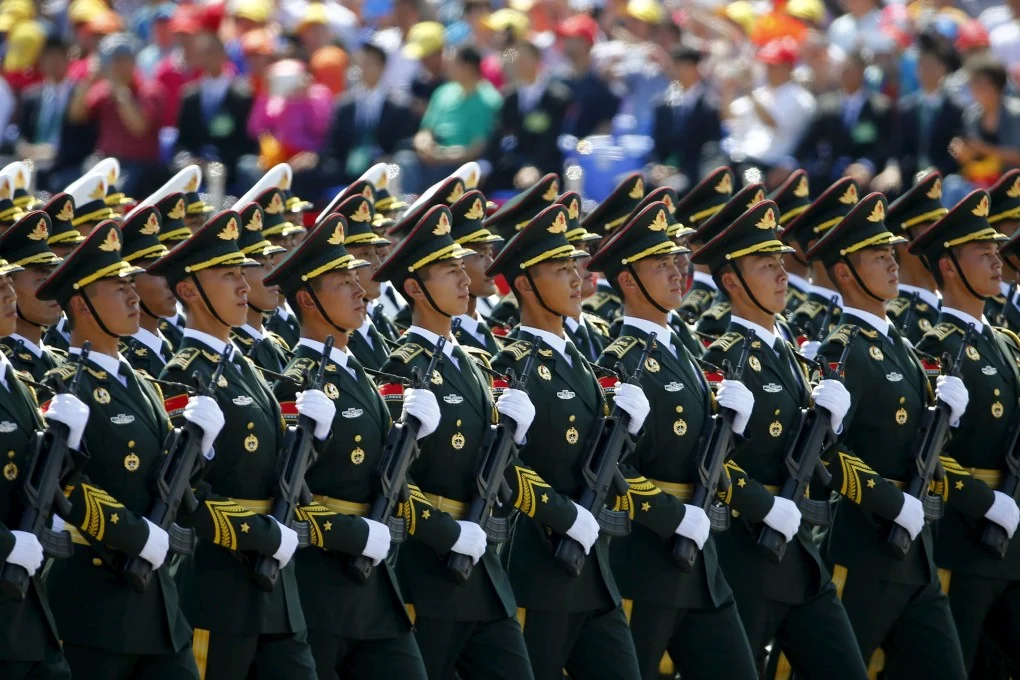
After years of planning, the reforms began in 2015 with the objective of improving readiness for deterrence, combat, and non-combat operations at home and abroad. This required close civil-military coordination across manpower, weapons, logistics, and political systems so that joint operations on land, sea, air, space, cyber, and information domains could be conducted more efficiently.
National and regional restructuring
A priority was to boost joint capability and curb the Army’s historic dominance, moving toward a more integrated and technology-driven force. Beijing cut 300,000 personnel, reducing active forces to about two million, while increasing the number of NCOs and uniformed civilian staff.
The Central Military Commission (CMC) was revamped into a joint body with 15 departments and offices. Seven army-centric military regions were dissolved and replaced with five joint theater commands. For the first time, an army headquarters was created, placing it on par with the navy, air force, and rocket force. Under the new division of labor, service branches organize, train, and equip, while the theater commands run combat operations.
Two new forces were added: the Strategic Support Force (covering space, cyber, and information) and the Joint Logistics Support Force with bases in each theater. Naval and missile capabilities expanded; some ground units shifted to the marines; and coastal aviation units were moved under the air force.
Theater commands now operate joint headquarters staffed by officers from all services, making cross-disciplinary training a priority. At lower tiers, regional ground, air, and naval commands operate under central oversight.
Reorganizing combat units
Beginning in April 2017, the second phase focused on combat formations. Numerous divisions and regiments were disbanded and reorganized into independent brigades. Five of the PLA’s 18 former group armies were dissolved, with personnel reallocated among 13 new group armies. Each now fields 12 brigades: six combined-arms combat brigades and six support brigades.
In the navy, units were restructured around new platforms, including three aircraft carriers with organic air wings forming new tactical groupings. The marine corps expanded from two to 11 brigades, while new amphibious ships capable of carrying troops and drones entered service.
The air force consolidated into 11 major bases and reorganized fighter squadrons into brigades. The rocket force expanded to nine major bases, with launch brigades rising from 29 to at least 41.
Since 2024, the Strategic Support Force has been split into three independent services for space, cyber, and information. Over the past decade, training facilities and bases have been modernized to sustain high levels of readiness. Joint exercises—domestic and multinational—continue alongside political oversight to maintain loyalty to the Communist Party.
Conclusion
Overall, the reforms have transformed China’s traditional “large army” into a more agile, joint, and technology-enabled force. With enhanced long-range capabilities across naval, air, missile, and support domains, the PLA is expanding its global operational reach. Beijing has set long-term goals through 2049, favoring active deterrence over direct conflict. Nonetheless, China’s armed forces signal readiness to act decisively should domestic or external circumstances change.
International Desk — DID Press Agency