DID Press: According to newly released documents from U.S. Department of Justice, despite repeated denials from New Delhi, a lobbying firm closely connected to Donald Trump played an active behind-the-scenes role on the day the “four-day war” cease-fire was announced. The revelations challenge the Modi government’s narrative that no foreign actor intervened in the process.
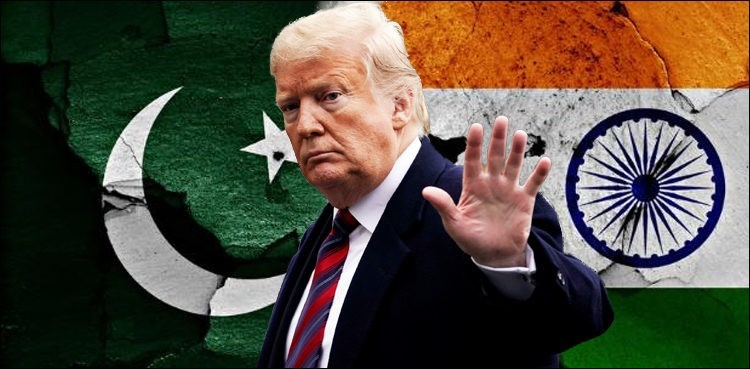
A report by The Hindu, together with filings published on the Justice Department’s FARA registry, sheds new light on Washington’s involvement in ending the four-day confrontation between India and Pakistan following the Pahalgam incident. The records show SHW LLC — headed by former Trump aide Jason Miller — was in intensive contact with the White House on 10 May 2025, the day the cease-fire was declared, contradicting India’s official insistence that there had been “no external mediation.”
A lucrative contract with a single client
According to FARA filings, the Indian Embassy signed a contract worth USD 150,000 per month with SHW LLC — totaling USD 1.8 million annually. Significantly, India was the firm’s only client in 2025, suggesting the partnership was designed specifically to influence figures close to Trump.
Bypassing traditional diplomatic channels
For the first time in India’s modern foreign policy, meetings for Foreign Minister S. Jaishankar and senior national security officials with top U.S. counterparts were arranged not through official diplomats, but via a private lobbying firm — highlighting the diminished reach of India’s diplomatic corps within the Trump administration.
Operation “Sindoor” and Trump’s trade threats
The filings show the lobbyists engaged U.S. trade officials on issues related to Sindoor Operation. That communication appears to support Trump’s claim that he threatened to sever trade ties to pressure India to accept a cease-fire — an assertion New Delhi had previously dismissed as “completely false.” Contacts with U.S. Trade Representative Jamieson Greer during the fighting suggest India’s primary concern was the economic fallout rather than developments on the battlefield.
Ricky Gill’s role and Washington’s acknowledgment
Even as India publicly rejected any foreign mediation, U.S. Secretary of State Marco Rubio awarded National Security Council official Ricky Gill a medal for his contribution to “de-escalating tensions between India and Pakistan,” an act widely seen as implicit confirmation of Washington’s role.
Analytical summary
The disclosures carry three major implications for India’s foreign policy:
Weakened diplomacy: Reliance on a private lobbying firm for high-level access underscores reduced influence of India’s professional diplomats.
Economics over security: Trade and tariff risks appeared to outweigh battlefield considerations during the crisis.
Contradiction with “self-reliance” messaging: Efforts to soften Trump’s stance through lobbying undermine the government’s projection of strategic independence and may provoke backlash among Indian nationalists.