Afghanistan Slips Into Silence as Free Media Disappears
DID Press: Afghanistan is facing a deepening but often overlooked crisis: the gradual collapse of independent media and silencing of journalistic space. As political, economic and humanitarian challenges persist, the absence of free media has left society without meaningful access to diverse voices, accountability, or reliable reporting from the ground. What is unfolding is not merely the restriction of several outlets or the detention of individual journalists — it is the erosion of public awareness and the weakening of one of the most critical mechanisms of social oversight.
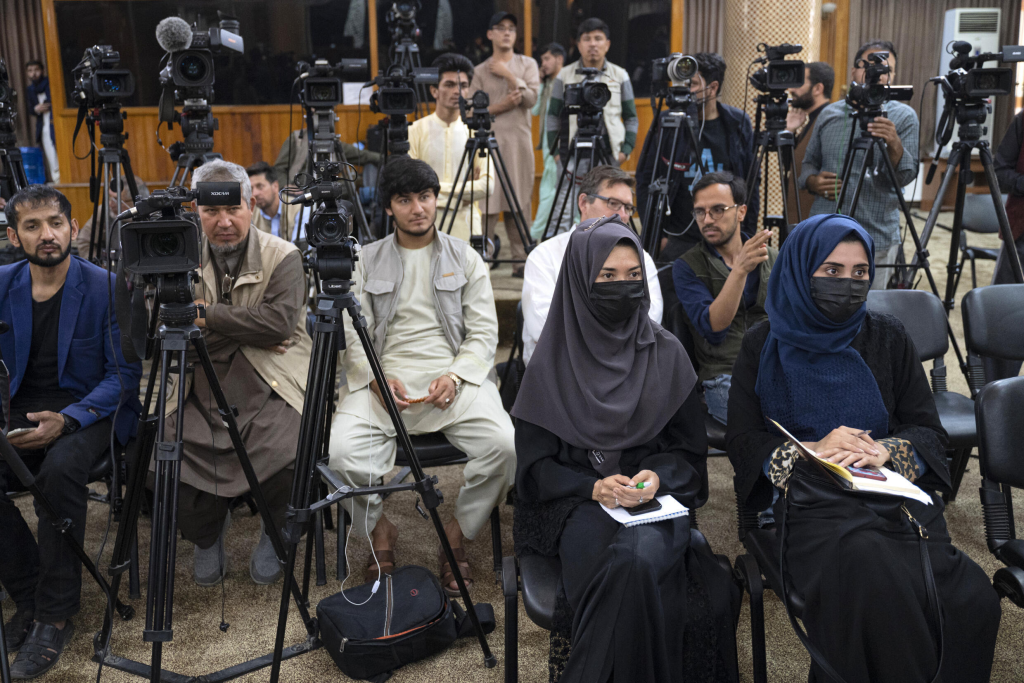
Since the Taliban returned to power, Afghanistan’s media environment has come under systematic pressure. Vague regulations, content censorship, security threats and direct interference by Taliban institutions have forced many newspapers, radio stations and television networks to close. Those that remain often operate within the confines of official narratives, avoiding sensitive subjects such as women’s rights, economic hardship and internal power disputes. Critical journalism has increasingly been replaced by cautious, repetitive and risk-free reporting.
One of the most significant consequences has been the spread of self-censorship. To protect their safety and livelihoods, many journalists now pre-emptively observe unwritten “red lines.” Fear has become part of the news-production process, turning journalists from watchdogs of power into transmitters of directives. This self-censorship is less visible than formal censorship but potentially more damaging, as it gradually erodes the culture of questioning.
Women journalists embody this silence. Many who once worked at the forefront of Afghan media have been banned, marginalized, or driven into exile. The exclusion of women is not only the loss of a professional group; it removes a vital perspective and weakens coverage of social realities. A media landscape that does not reflect half the population is, by definition, incomplete.
The disappearance of free media directly affects society. In the absence of open information flows, rumor replaces news, official narratives go unchallenged, and citizens lose the ability to assess events critically. A society without independent information becomes more vulnerable to unilateral decision-making and less capable of meaningful public debate.
Internationally, declining media coverage has coincided with restricted access inside the country. As local journalists are silenced and foreign reporters face constraints, Afghanistan risks becoming a quieter presence in global public opinion — reducing political and human-rights pressure on the Taliban and increasing the danger of gradual neglect.
Even so, Afghanistan journalists in exile continue efforts to sustain independent reporting, despite distance, limited resources and political pressures. The future of Afghan media will depend in part on these efforts, as well as on continued international attention to Afghans’ right to free information.
Ultimately, the media crisis reflects the broader condition of Afghan society. A society without free media slowly loses the capacity to see, to hear and to question. The silence may be gradual — but its consequences are profound and lasting.
By Sulaiman Saber — DID News Agency