DID Press: Recent developments in Yemen indicate the United Arab Emirates’ bid to expand its influence in the country’s east not only triggered a firm response from Saudi Arabia, but also positioned Riyadh to redefine power dynamics in the south to its advantage. The shift carries significant implications for the trajectory of Yemen’s conflict and broader regional power relations.
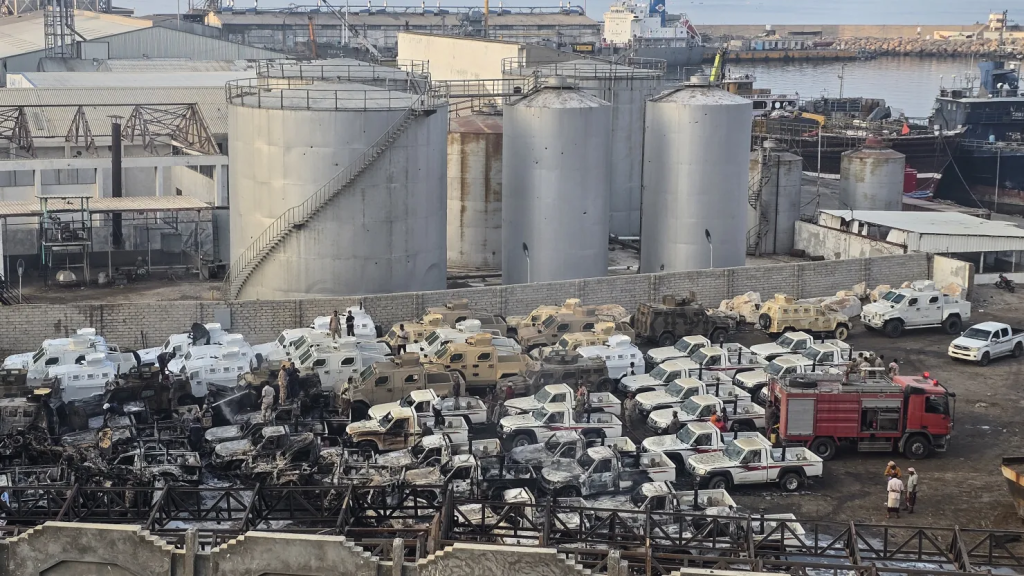
Events showed that the UAE, through the Southern Transitional Council’s seizure of Hadramout and al-Mahra provinces, had crossed Saudi “red lines,” posing a direct threat to Riyadh’s national security — a move Saudi Arabia cannot ignore.
Analysts argue that UAE President Mohammed bin Zayed would not have advanced such a project without at least tacit U.S. consent and coordination with Israel. The timing, coinciding with Israel’s recognition of Somaliland, was viewed as part of a coordinated effort to expand influence in a strategic region and weaken Sanaa after two years of unsuccessful Western and Israeli air campaigns.
Ultimately, the project, however, evolved into a direct challenge to Saudi Arabia. By adopting a measured political approach, Riyadh managed to tilt the outcome in its favor. Throughout two years of the “Al-Aqsa Storm” conflict, Saudi Arabia refrained from direct military involvement against Sanaa while pursuing de-escalation with Iran and Ansarallah — a strategy that earned it Arab public support along with backing from Qatar and Oman.
By sponsoring “south–south” dialogue in Riyadh, Saudi Arabia created a political track to consolidate its gains. As a result, the “southern question” moved beyond the monopoly of the Southern Transitional Council, reducing the council from a self-styled standard-bearer of a “southern Arab state” to just one actor among several — undermining a core objective of the UAE’s post-coup agenda.
This success would not have been possible without a convergence of interests between Saudi Arabia and Ansarallah, even as UAE-aligned factions allege tactical coordination on the ground. The development could reopen channels between Riyadh and Ansarallah and revive the suspended “roadmap,” which envisions sharing oil revenues between Sanaa and Aden but remains stalled under U.S. constraints. Control of Hadramout — a key oil-producing region — by the Transitional Council would have further weakened that plan.
The episode also exposed, for the first time, the high political costs of the UAE’s partnership with Israel, a relationship Abu Dhabi had previously leveraged without paying a visible price. Within the Gulf, it became clearer that the UAE lacks the capacity to challenge Saudi Arabia’s leadership role in the GCC — just as Qatar ultimately weathered four years of blockade beginning in 2017.
The central question now is how Saudi Arabia will manage Yemen going forward while balancing its own interests with continued U.S. influence. Riyadh has not fully removed UAE-aligned forces from Yemen, leaving elements of the crisis unresolved.
Given Yemen’s linkage to broader regional dynamics, the roadmap remains suspended — likely contingent either on a wider U.S.–Iran understanding or on a renewed conflict that changes the balance of power. What has already occurred, however, represents another setback for the United States, Europe, and Israel in Yemen — achieved without a single shot being fired.