DID Press: Recent developments indicate that the confrontation between Iran and Israel is not merely a temporary political or security dispute, but a deeper conflict rooted in the collision of two distinct ideological and intellectual frameworks. On one side stands religious Zionism, which sanctifies political and military power through ethnocentric and exclusionary interpretations of religion. On the other is the Islamic resistance discourse, shaped around concepts of justice, defense of the oppressed, and rejection of domination.
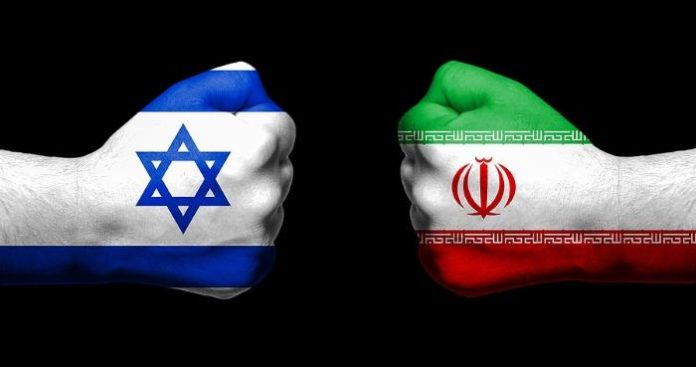
Religious Zionism, particularly since the 1970s, has gained significant influence within Israel’s political, military, and security institutions. Drawing on specific interpretations of religious texts, this ideology views the concept of a “chosen people” as granting exclusive rights to the so-called Promised Land, while denying independent rights and status to non-Jews in the same geography. Such readings remove religion from the realm of ethics and spirituality and transform it into an instrument for power projection, occupation, and the exclusion of others.
The Talmud, a complex body of Jewish legal and interpretive texts, contains diverse and sometimes contradictory readings. However, extremist and racist interpretations promoted by certain rabbis have been used as ideological justification for organized violence. Examples such as the writings of Rabbi Yitzhak Shapira—who has argued that even the killing of children can be justified as a response to “potential future threats”—illustrate how religion can be mobilized to legitimize settlement expansion, home demolitions, and indiscriminate attacks. While these views do not represent Judaism as a whole, the presence and influence of their proponents within official institutions have produced tangible and dangerous consequences.
In contrast, the Islamic Republic of Iran has adopted a clear and ideological position since its founding. Anchored in Quranic and Shiite teachings—particularly the principles of resisting oppression and defending the oppressed—Iran frames resistance not merely as a political tactic, but as a moral and religious obligation. The Quranic verse, “Were it not for God’s repelling some people by means of others,” forms a conceptual foundation for this outlook, which views opposition to domination and occupation as essential to the establishment of justice.
From this perspective, Iran has become an ideological barrier to Zionism—one that challenges the religious legitimacy of violence and calls into question Israel’s dominant narrative. This confrontation, contrary to purely secular interpretations of conflict, represents a comprehensive clash between two worldviews: one that categorizes human beings into superior and inferior groups based on ethnicity and religion, and another that places human dignity and justice at its core.
Ultimately, what sustains and defines this confrontation is not simply the balance of power, but a struggle over meaning, legitimacy, and ethics. Religious Zionism seeks to normalize and sanctify occupation and exclusion through hazardous interpretations of faith, while Iran’s resistance discourse aims to demonstrate that religion can instead serve freedom, justice, and the defense of humanity. This ideological divide remains the central driver of the conflict and will continue to shape regional politics until one narrative prevails over the other.
From this vantage point, the Iran–Israel conflict can be understood as a battle over the future moral and ideological direction of the Middle East. Religious Zionism attempts to entrench a project based on ethnic supremacy and the sanctification of power, while Iran positions itself as a structural and civilizational obstacle to what it describes as an expansionist vision stretching “from the Nile to the Euphrates.” As long as these two opposing narratives—one centered on sanctified occupation and the other on ethical resistance—remain in direct opposition, the confrontation between Tehran and Tel Aviv will persist as one of the most decisive ideological and political fault lines shaping the region’s future.
By Zahra Forough — DID News Agency