Systemic Competition with China: Trump Revives 1950s Strategic Logic
DID Press: US President Donald Trump, posted on Truth Social calling for an increase in the U.S. military budget for 2027 from about $1 trillion to $1.5 trillion.
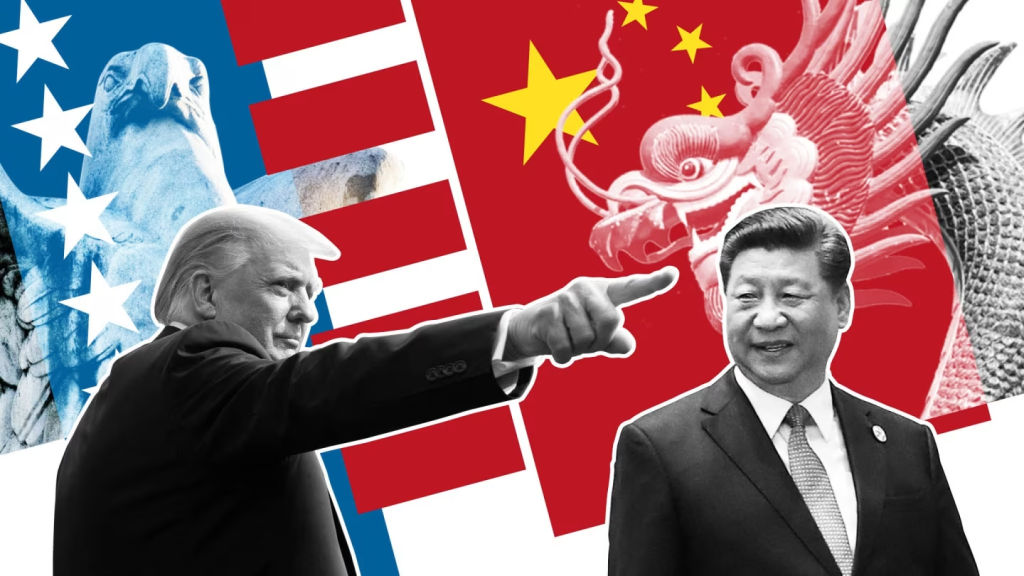
This post is not merely a financial stance or political gesture; it signals the reactivation of a historical logic in U.S. national security policy, first articulated in the famous NSC-68 document of 1950. The importance of this comparison lies not in surface similarities, but in the alignment of their “strategic language”: both view the world as a theater of existential competition and see a surge in military and industrial power not as a choice, but a necessity.
NSC-68: The NSC-68 document, drafted on April 7, 1950, for President Harry Truman, is one of the foundational texts in U.S. strategic history. It argued that the Soviet Union was not just a geopolitical rival but carried an ideological and civilizational project that structurally threatened the global balance. The document concluded that existing U.S. policies and military capacity were “dangerously inadequate.” Its central recommendation was a process of rapid, sustained, and comprehensive power expansion—not only in the military but across the economy, science, technology, and political organization.
This logic enabled one of the largest budgetary surges in U.S. history. In 1950, the total defense budget request was about $13 billion; after adopting the NSC-68 framework and with the outbreak of the Korean War, it rose to over $60 billion in 1951. NSC-68 was not just a spending plan but a “strategic license for mobilization,” providing the mental and political framework for this expansion.
Technological and Industrial Mobilization: The document was written as the nuclear arms race entered a new phase. Weeks before NSC-68 was finalized, Truman ordered the development of the hydrogen bomb—shifting U.S. policy from initial deterrence to competition in scale, destructive power, and technological superiority. From this point, the issue was no longer merely possessing nuclear weapons but having the industrial capacity to produce, test, and deploy them at scale.
The direct result was unprecedented expansion of U.S. military and aerospace industries. Developing the hydrogen bomb required strategic bombers, long-range air bases, radar networks, jet engines, and extensive supply chains. Projects like the B-47 and later B-52 were not just weapons systems—they were massive industrial projects engaging hundreds of thousands of workers, dozens of major companies, and billions of dollars. This led to the structural formation that Eisenhower later called the “military-industrial complex,” where strategy, budget, technology, and industry became permanently intertwined.
This framework also influenced later wars. NSC-68 did not create the Korean or Vietnam Wars but institutionalized a logic where regional conflicts were seen as parts of a global chain. In Korea, the U.S. entered a limited war seen as a test of resolve and credibility against the Soviet bloc. In Vietnam, this logic deepened: defending a weak state in Southeast Asia became a matter tied to the balance of the entire global system. From then on, increased budgets, mass weapons production, and widespread military presence became permanent features of U.S. policy.
Competition Today with China: A Return to Historical Logic
This logic is now applied to U.S.-China competition. Just as NSC-68 saw competition with the USSR as systemic, involving military and industrial capacity, today’s competition with China is framed as technological, industrial, and supply-chain-centric. The issue is not just the number of ships or missiles but semiconductors, defense industries, secure supply chains, mass production capacity, and innovation speed. Current national security documents again emphasize reviving industrial defense bases, massive investment, and integrating economy and security.
In this sense, Trump’s post signals a return to the historical logic NSC-68 established: moving from limited power management to structural mobilization—the same logic that drove hydrogen bomb development and Cold War budget surges, transformed strategic industries, and shaped the Korean and Vietnam Wars. Today, the world is again framed as a theater of systemic competition, where the dominant response is a surge in budget, industry, and military power—not gradual reform.
International Desk — DID News Agency