Islamic Revolution of Iran and Redefinition of Regional Order
DID Press: Victory of the Islamic Revolution of Iran in 1979 was not merely a political transformation within a single country; it marked a pivotal moment in the modern history of the Middle East, fundamentally reshaping the regional power dynamics and redefining the regional order. At a time when the region was under the influence of Cold War binaries, authoritarian dependencies, and security structures reliant on foreign powers, the Islamic Revolution introduced a new narrative—one centered around independence, identity, justice, and resistance to foreign dominance.
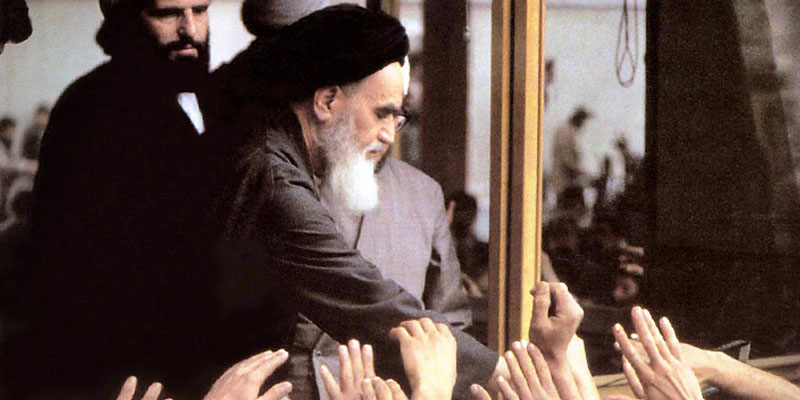
In the first decade after the revolution, despite the Iran-Iraq War and extensive external pressures, Iran managed to solidify a new political identity in the region. Unlike the previous order, which was built on alignment with great powers, this new identity was rooted in self-reliance and leveraging local capacities. This fundamental shift altered the balance of power among the key regional players—Iran, Saudi Arabia, Iraq, and Israel—transforming Iran from a passive ally of the West to an active player rewriting the rules of engagement.
One of the most significant strategic outcomes of the Islamic Revolution was Iran’s role in shaping new resistance and security frameworks across the region. By supporting resistance movements in Lebanon, Palestine, and Syria, and forming a network of aligned actors in Iraq, Yemen, and other parts of the region, Iran created a novel power structure that stood in opposition to the U.S. and its allies. This resistance axis not only shifted military and security dynamics but also altered the political and psychological calculations of the region. Today, no security plan in the Middle East can be implemented without considering Iran and its allies.
The Islamic Revolution also brought to the forefront the concepts of political independence and Islamic democracy, offering an alternative model of governance against the region’s monarchies and authoritarian regimes. Although this model faced numerous challenges, it inspired a wave of awakening and self-awareness across the Islamic world. Political and social movements in countries like Tunisia, Egypt, Bahrain, and Yemen carried traces of the Islamic Revolution’s influence, even though their paths and outcomes were diverse.
Among regional players, Israel perceived the changes brought about by the Islamic Revolution as the most threatening. The rise of the resistance axis, the enhancement of Iran’s missile capabilities, and its growing regional influence fundamentally altered Israel’s security equations, forcing it to revise its defensive and offensive strategies.
In summary, the Islamic Revolution of Iran not only redefined the regional order but also established a power structure that, more than four decades later, remains one of the most significant forces in shaping the future of the Middle East. Unlike many 20th-century revolutions that collapsed under external pressure, this revolution managed to achieve a sustainable and influential position in global affairs by relying on an independent ideology and a network of regional allies.
By Mohsen Mowahed — DID Press Agency