DID Press: Russia, Iran, Belarus, North Korea, and Myanmar have agreed to start an inclusive consultative process for drafting the “Eurasian Charter on Diversity and Multipolarity in the 21st Century”.
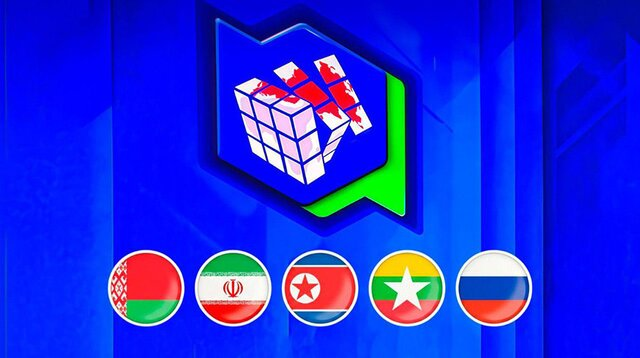
According to the Belarusian Ministry of Foreign Affairs, the decision was made in a joint statement, with the time and location for the consultations to be determined later by the involved parties.
The statement outlines that the participants will focus on discussing both content and procedural aspects of the Charter within the Eurasian format, and will assess the results of the consultative process. The goal of this initiative is to create a new framework for cooperation and security in Eurasia.
The idea for the Eurasian Charter was first introduced at the inaugural Eurasian Security Conference in October 2023 in Minsk. Following that, expert meetings and specialized panels on the document were held during the second and third editions of the conference in 2024 and 2025. In November 2024, the foreign ministers of Russia and Belarus signed a document titled “Shared Views on the Eurasian Charter on Diversity and Multipolarity in the 21st Century”.
As part of this process, Maxim Ryzhankov, the Belarusian Foreign Minister, stated in August 2025 that many countries have expressed interest in the initiative, given the failure of Western unilateral approaches, globalization, and the unipolar world order. According to him, the Eurasian Charter could help these nations break free from Western-centered dependencies that are used as political leverage.
Moreover, Vladislav Maslennikov, the Head of the European Department at Russia’s Ministry of Foreign Affairs, stated in late January 2026 that practical work on the Charter would begin soon. He added that the initiative, presented in June 2024 by President Vladimir Putin as a plan to build a new security architecture in Eurasia, aims to address current security challenges and stabilize the military-political situation in the continent.