Afghanistan in Mirror of Pakistan’s Defense Minister’s Confessions
DID Press: The statements of Pakistan’s Defense Minister Khawaja Asif can be viewed as a sign of a gap in the country’s official narrative. By criticizing the decisions of Zia-ul-Haq and Pervez Musharraf, he effectively places part of the responsibility on former generals who shaped Pakistan’s Afghanistan policy for decades. This distancing may be an attempt to reconstruct the image of the current government for domestic public opinion as well as the international community.
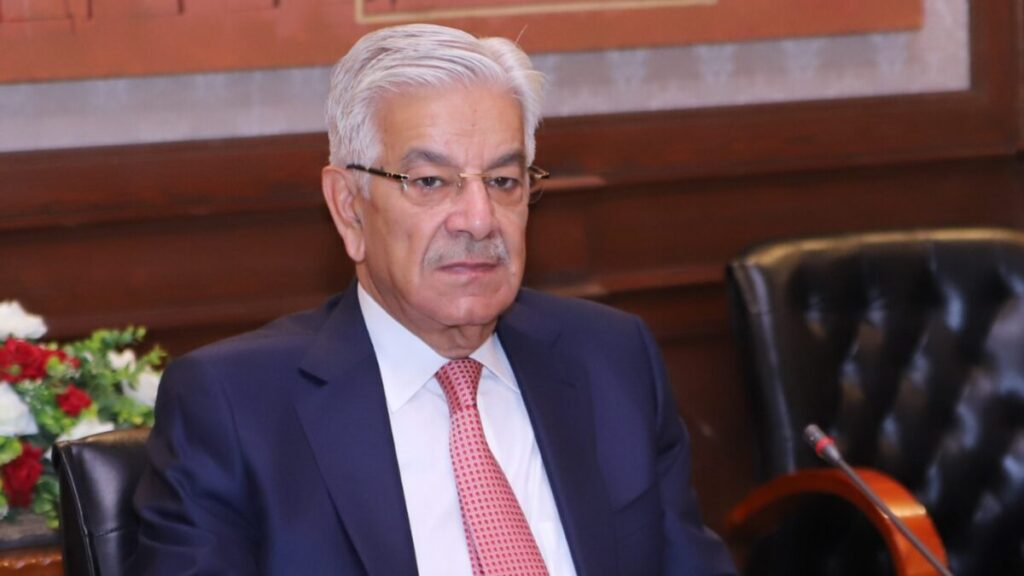
Perhaps the most precise description of Asif’s recent remarks, delivered in Pakistan’s National Assembly, is “from religious slogans to geopolitical interests.” Yet the echoes of his words were undoubtedly heard in Kabul, Kandahar, and Herat provinces. For Afghans, “jihad” is not merely a political term but part of the collective memory of a nation. For decades, Pakistan’s official narrative claimed that the country supported mujahideen out of Islamic solidarity and in defense of the Afghanistan Muslim population. Religious schools, refugee camps, educational centers, and supply lines across the Durand Line were all understood within this narrative: aiding an occupied nation.
However, the Defense Minister openly said that Islamabad entered the war not for God but to gain U.S. approval. While this may not be new for many analysts, said by a senior Pakistani official, it carries a different weight. It seems part of what has long been whispered in political circles in Kabul is now being voiced in Islamabad itself.
The 1980s saw Afghanistan as a battlefield for superpower rivalry. The U.S., seeking to contain the Soviets, needed a regional ally, and Pakistan was the ideal choice. This cooperation directed billions of dollars in financial and military aid to Islamabad and enhanced its geopolitical position. Yet the main cost of the war was borne by the Afghan people: villages were destroyed, families displaced, and a generation grew up amid war.
Asif’s statements are also an acknowledgment that Pakistani policymakers used “jihad” not only as a religious belief but as a strategic tool—for domestic legitimacy, to attract foreign support, and to consolidate regional influence. This instrumental approach later affected Afghanistan, both during civil wars and during the rise of the Taliban.
The most controversial part of his statements challenges the narrative of the “Soviet invasion,” describing it as created by the U.S. For people who remember bombings, landmines, and forced displacement, such claims are not easily accepted. While it is true that the U.S. politically exploited Afghanistan resistance, it cannot be denied that Soviet forces entered Afghanistan and maintained a military presence for years. Revisiting history without care and fairness risks negating the suffering of a nation.
From another angle, Asif’s remarks can be seen as a sign of a gap in Pakistan’s official narrative. By criticizing the decisions of Zia-ul-Haq and Musharraf, he shifts part of the historical responsibility to former generals who shaped Afghan policy for decades. This distancing may be an effort to rebuild the current government’s image before domestic and international audiences.
However, the key question for Afghans is: Will this belated confession lead to a change in behavior? Is Islamabad ready to acknowledge its past role in Afghanistan’s instability and move toward genuine cooperation? Or are these statements simply part of an internal political struggle in Pakistan intended for domestic consumption?
Over the past four decades, Afghanistan has repeatedly been a stage for others’ rivalries—from the Cold War to the fight against terrorism. Asif’s statements remind us that in regional calculations, religious and political slogans have often served as a cover for geopolitical interests. Ultimately, what remains are the destruction and wounds inflicted on this land.
Perhaps the time has come for all regional actors, including Pakistan, to recognize not only in words but also in actions that Afghanistan’s stability is not a bargaining chip with great powers but a necessity for collective regional security. A sincere acknowledgment of the past could mark the beginning of a new path—one in which Afghanistan is no longer a playground for others’ agendas.
By Waezi – DID Press Agency