Taliban: US Inclination to Negotiate Reflects Fear of War with Iran
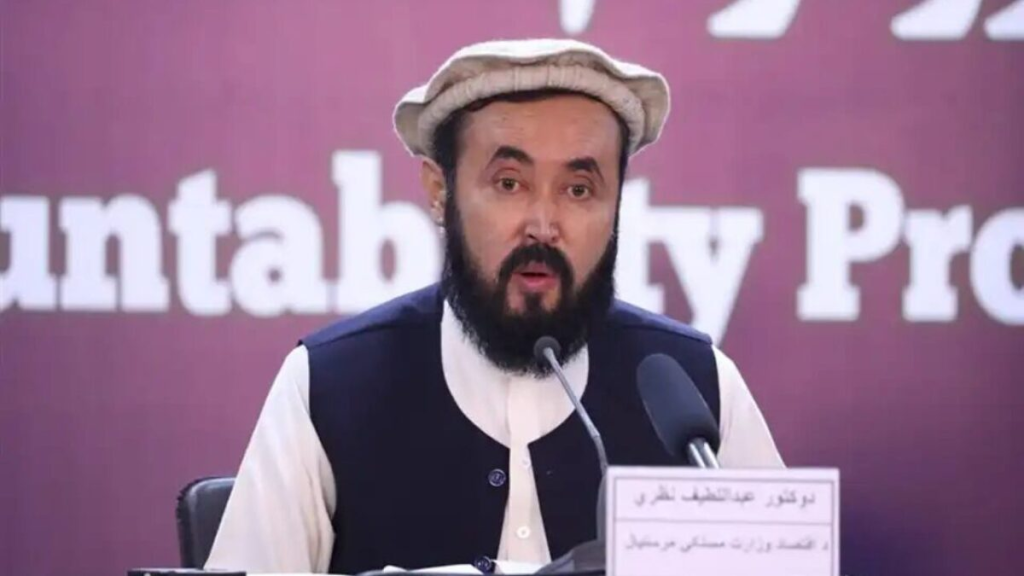
DID Press: Dr. Abdul Latif Nazari, Professional Deputy of the Ministry of Economy in the Taliban government, wrote in an analysis on his Facebook page that the US’ willingness to begin a new round of negotiations with Iran reflects Washington’s inability to enter a costly war with Tehran, rather than being a sign of U.S. initiative.
According to Nazari, the US requires control over strategic regions, including the Middle East, to maintain its global dominance. This region, he notes, contains vast energy resources, vital global trade routes, and serves as a connecting hub between three continents.
Nazari emphasized Iran’s prominent position in this geography and its domestic progress, including joining Shanghai Cooperation Organization(SCO), arguing that Iran has become a key regional actor, thereby increasing pressure on the U.S. and the West. He believes, however, that a war with Iran would constitute a “difficult and deadly test” for Washington, as the outcome of such a conflict could shift the global order against the United States.
He further noted that President Donald Trump’s behavior demonstrates that he retreats from threats only when the cost of action outweighs the benefits, as seen in the Greenland issue, European warnings about Russia, and the tariff war with China. In this context, Iran’s “regional war doctrine” and its insistence on expanding the scope of any conflict have amplified U.S. strategic hesitation.
Tehran has warned that any attack would escalate into a full-scale regional war—a threat which, according to Nazari, is grounded not merely in diplomacy but in on-the-ground realities and the theory of “defensive realism.”
Nazari also highlighted regional governments’ opposition to war, increasing domestic cohesion in Iran, and the readiness of China and Russia to conduct joint exercises with Tehran as indicators of a shifting balance of power in West Asia. According to him, the “Resistance Axis” has declared that, in the event of a U.S. attack, US interests across the region would be targeted, further raising the prospect of a protracted conflict for Washington.
In conclusion, Nazari asserted that the U.S. sees no need for actual war as long as it can exert pressure on Iran’s economy and society under the “shadow of war.” He argued that Iran’s deterrent capabilities have disrupted the traditional “all options on the table” game, making “Iran’s options also on the table,” including an unlimited war with terms set by Tehran and covering all U.S. bases in the region.
He concluded that Washington’s willingness to initiate new negotiations signals a serious challenge in the White House’s resolve to carry out military threats, with talks serving as a tactical move to buy time, reduce domestic pressure, and justify inaction internationally.