Taliban Earn Millions from Sale of Mines in Panjshir and Nuristan
DID Press: Taliban government has reported substantial revenue from the sale of precious and semi-precious stones mined in Afghanistan’s eastern provinces of Panjshir and Nuristan.
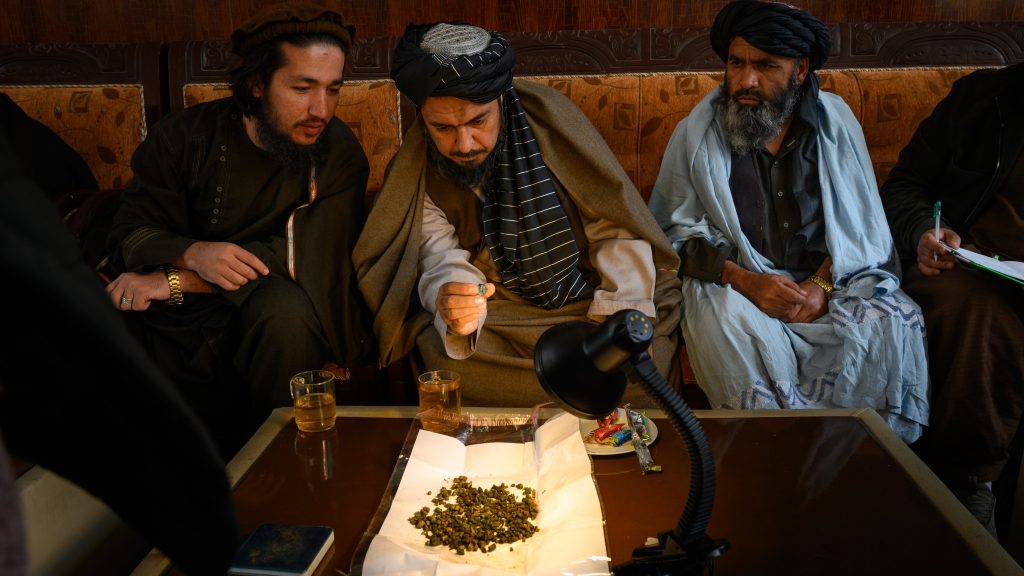
Sayed Rahim Ameer, head of the Taliban’s Ministry of Mines and Petroleum in Nuristan, announced that over 11,600 kilograms of gemstones from the Duab mines were sold in a public auction. The transaction included 7,513 carats of emeralds from Panjshir and 11,687 kilograms of various gemstones from Nuristan, with the total value exceeding 113 million Afghanis (approximately $1.3 million). Around 11.36 million Afghanis were deposited into the Taliban treasury.
The stones sold included kunzite, tourmaline, crystal, and marginite. Ameer said the volume of extraction and sales has increased in recent months, with auctions attended by domestic traders.
During over four years of Taliban rule, the extraction and sale of natural resources have become a key revenue source for the government. Critics, however, contend that the process is largely unregulated and non-professional, and that proceeds are directed toward consolidating Taliban control rather than national development or improving livelihoods.
In Panjshir, authorities reported the discovery of more than 260 new emerald mines this year, highlighting the province’s potential as a major gemstone-producing region. Geologists say that with technical extraction methods, proper infrastructure, and investment, Panjshir and Nuristan could become significant centers for emeralds and other precious stones in Afghanistan.
Nuristan, a mountainous province in eastern Afghanistan, is rich in gemstones due to its unique geological structure. The districts of Duab and parts of Waigal are key mining areas, where extraction is often traditional or semi-industrial. Experts warn that without technical operations and investment, the true potential of these natural resources remains underutilized.
The report emphasizes that, despite large-scale extraction and sales, much of the revenue does not contribute to economic development or local livelihoods. Communities in mining areas continue to face unemployment and poverty, while the Taliban prioritize revenue generation and state funding over local benefits.