Pakistan Strikes on Afghanistan Exposed Islamabad’s Strategic Deadlock
DID Press: Pakistan once again resorted to military pressure against Afghanistan, striking targets in the country’s eastern provinces. The de facto authorities in Kabul say the attacks killed and wounded dozens of civilians. The operation, widely seen as an attempt to deflect domestic crises and security failures, has triggered public outrage in Afghanistan and concern among regional stakeholders.
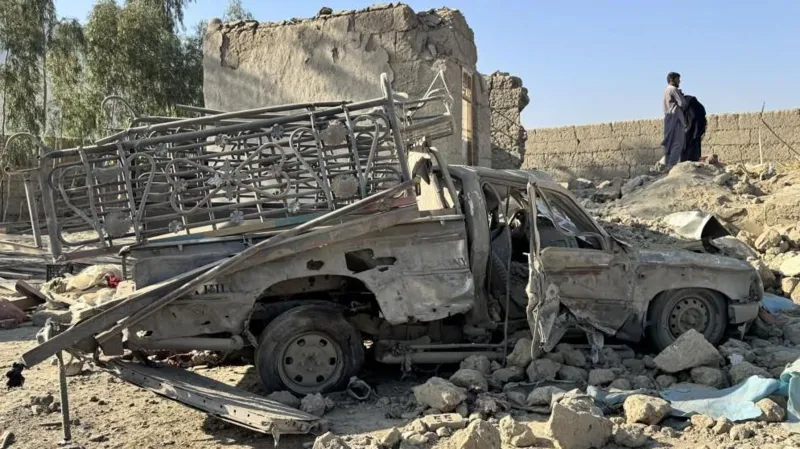
Far from being a limited border incident, the strikes signal a deepening strategic crisis between the two neighbors and the erosion of Islamabad’s traditional security doctrine. The episode raises fundamental questions about Pakistan’s objectives, the geopolitical ramifications of escalation, and the future trajectory of Kabul–Islamabad relations.
Islamabad claims the strikes targeted armed groups launching attacks from Afghanistan territory. This official narrative, however, only partially reflects the complexity of the problem. Pakistan has faced a surge in attacks by Tehrik-i-Taliban Pakistan in recent years and has repeatedly accused Kabul of failing to curb the group—allegations consistently rejected by the Afghan Taliban, who frame them as a cover for Pakistan’s own security shortcomings.
Analysts assess the latest operation less as a defensive measure than as political coercion aimed at forcing the Taliban-led authorities in Kabul to expand security cooperation and accommodate Pakistan’s strategic demands. While this pressure tactic has precedent in bilateral relations, the current Taliban leadership appears less willing to concede under coercion.
The stakes are heightened by the geopolitical salience of Afghanistan and Pakistan, situated in one of the world’s most volatile strategic corridors—where great-power competition, non-state armed actors, and fragile political orders intersect. The strikes risk cascading effects: deepening mistrust between Kabul and Islamabad, further constraining security cooperation; empowering extremist groups that exploit bilateral rifts; widening space for external actors seeking leverage in both countries; and exacerbating humanitarian pressures in long-suffering border communities.
Over the past two decades, Pakistan has repeatedly relied on military tools and security pressure to shape Kabul’s behavior. Experience suggests this approach has not delivered durable security gains and has instead fueled hostility while eroding Islamabad’s influence in Afghanistan. Contrary to assumptions in some Pakistani policy circles, the Taliban authorities now act as an autonomous political actor and interpret external coercion as a challenge to their legitimacy.
The latest strike therefore reflects a continuation of strategic error rather than an assertion of strength. Kabul’s response—leveraging diplomatic channels and media pressure to place Islamabad on the defensive—signals a shift in posture: Afghanistan no longer seeks to function as Pakistan’s security buffer. This recalibration leaves Islamabad facing the paradox of strategic setback despite decades of engagement with Afghan actors.
Absent a mutually agreed framework for managing cross-border threats, unilateral military action will perpetuate a cycle of violence and instability. Sustainable border security will depend on dialogue, structured cooperation, and reciprocal restraint—not airstrikes and coercive signaling. Failure to recalibrate risks prolonged attrition that will be borne most heavily by civilians in border regions.