DID Press: US media recent reports on serious warnings from American military institutions about the consequences of any military action against Iran has once again exposed a foundational fault line in the U.S. political system: the tension between institutional rationality and the personalized, authoritarian will of the president. The Chairman of the Joint Chiefs of Staff is strongly opposed to an attack on Iran, yet Trump—driven by personalistic decision-making and close alignment with the Israeli government—continues to push a confrontational line.
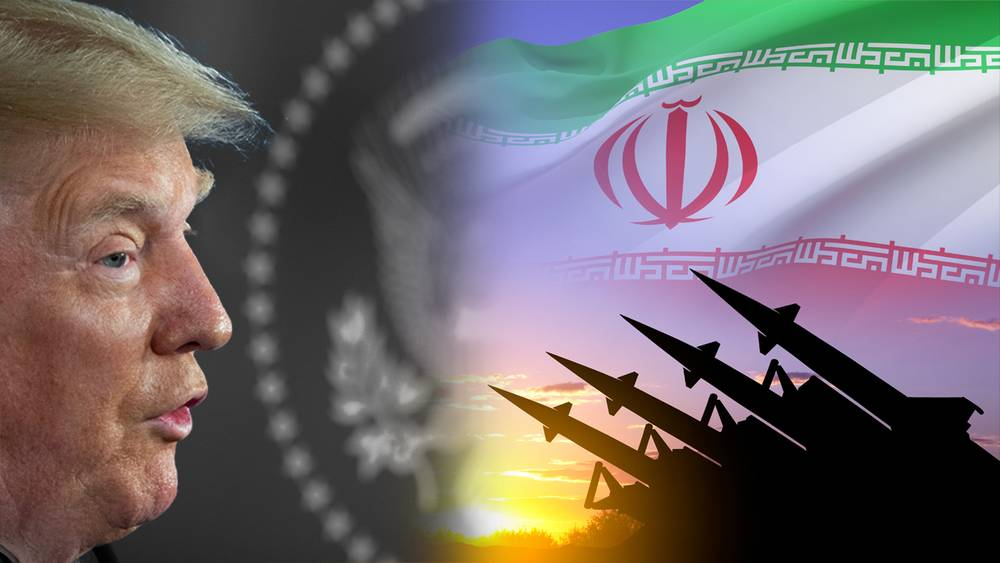
The dispute between Trump and the U.S. military leadership is not merely tactical. It reflects a deeper structural rupture that could place both America’s future and regional stability at unprecedented risk. Senior commanders have warned explicitly that any operation against Iran—ranging from limited strikes to large-scale air campaigns—would entail “significant risks” and could draw the United States into a protracted war of attrition. These assessments stem not from political caution but from decades of combat experience, intelligence analysis, and a granular understanding of Middle Eastern geopolitics and Iran’s regional reach.
Trump’s dismissal of these warnings as “incorrect,” coupled with his insistence on personal decision-making authority, underscores a governing pattern rooted more in unilateral will than in collective, institutional judgment. While this pattern is not unprecedented in U.S. history, it has become more pronounced under Trump. The U.S. constitutional architecture is designed around separation of powers, institutional oversight, and constraints on personalized authority. When a president sidelines these mechanisms, strategic equilibrium erodes and the country is steered toward high-risk decisions with potentially catastrophic consequences.
In the Iran file, the risks are acute. Iran is not 2003 Iraq War, not Libya in 2011, and not Venezuela in 2026. Iran’s military structure, strategic depth, regional networks, and deterrence capabilities would transform any U.S. strike into a multi-layered crisis. Assessments cited by The Wall Street Journal and Financial Times similarly warn that even limited action could rapidly escalate into a wider war, strain U.S. munitions stockpiles, and plunge the region into an open-ended cycle of instability.
Despite these warnings, Trump’s insistence on unilateral decision-making and disregard for expert assessments point to a war-prone posture driven less by long-term U.S. strategic interests than by short-term political calculation, performative displays of personal power, and the persistent encouragement of Benjamin Netanyahu.
The consequences of such an approach would not be confined to Iran. A military confrontation would reverberate across the region, placing U.S. bases and strategic interests under sustained threat and entangling American forces in a conflict with no plausible prospect of rapid victory or dignified exit. The precedents of Afghanistan and Iraq demonstrate that entering wars is easy; exiting them can take decades, at immense human, economic, political, and reputational cost. A war with Iran would carry even darker and more destabilizing implications—potentially igniting the entire region, from the Persian Gulf to the Mediterranean, disrupting energy markets and undermining global security.
At stake is not only regional stability but the integrity of U.S. national decision-making. Disregarding military assessments—produced by institutions tasked with safeguarding national security—risks accelerating the erosion of American power and global credibility. Major powers endure not through episodic displays of force, but through calibrated decision-making anchored in institutional expertise. Personalized, authoritarian decision-making, by contrast, corrodes strategic coherence and accelerates systemic decline.
Ultimately, the rift between Trump and the U.S. military leadership over Iran is more than a tactical disagreement. It is a mirror reflecting a deeper crisis: personalized decision-making versus institutional rationality. If this trajectory persists, the fallout will not be limited to the Middle East; it will rebound onto the United States itself, destabilizing the foundations of its global power.
International Desk — DID Press Agency