DID Press: A new phase of confrontation unfolded overnight as Iran and allied forces launched coordinated strikes across multiple fronts, placing US and Israeli positions under intensified pressure and signaling a potential shift in the regional balance of power.
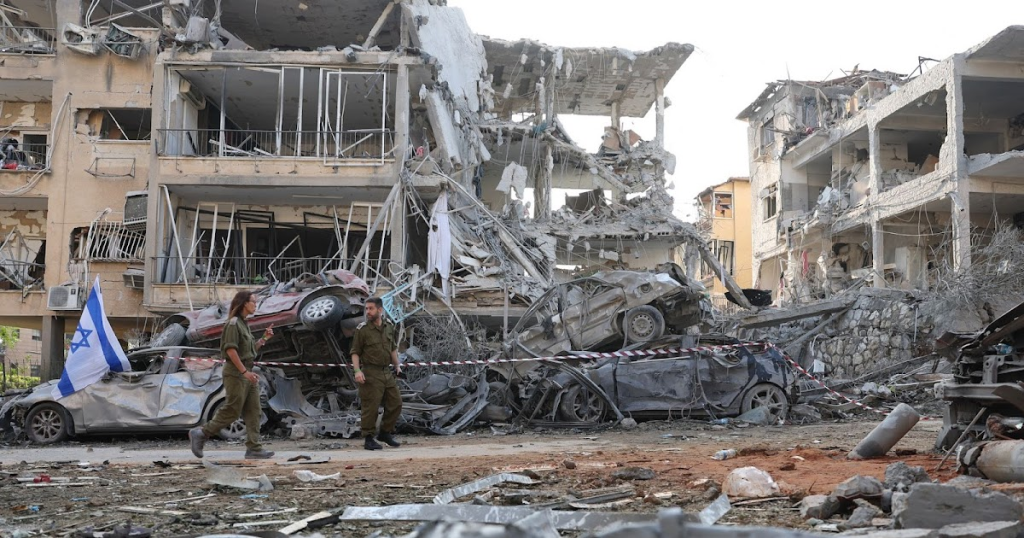
Iran’s Islamic Revolutionary Guard Corps began the latest waves of the “Operation True Promise 4” operation before dawn, targeting more than 60 military and strategic sites across northern Israel, including areas around Haifa, Kiryat Shmona and Hadera. Western media reports acknowledged that Israel’s air defense systems struggled to intercept the scale of incoming missiles and drones, while military censorship limited official casualty figures.
At the same time, the Lebanese movement Hezbollah carried out strikes against Israeli troop concentrations along the southern Lebanon border, hitting locations such as Khallat al-Asafir, the Marj site and areas near Kfar Giladi. The coordinated timing of these attacks reportedly forced evacuations in parts of northern Israel and placed the region under heightened security paralysis.
In Iraq, the group known as the Islamic Resistance claimed 31 drone and missile operations overnight, including the reported downing of a U.S. KC‑135 Stratotanker aerial refueling aircraft in western Iraq. The aircraft plays a critical role in extending the operational range of U.S. air missions.
Further south, Iranian strikes targeted several U.S. military facilities in the region. Reports said ballistic missiles and drones hit the Abdullah Mubarak base in Kuwait, while in the Indian Ocean a U.S. combat support vessel was reportedly struck by Qadr-380 missiles. In Dubai’s Jebel Ali port, a U.S. munitions supply vessel identified as MSP was said to have been destroyed by multiple drones.
Casualties among U.S. personnel have also begun to emerge. The network CBS News reported that 19 seriously wounded American service members were evacuated to Germany for treatment.
The conflict has also triggered immediate economic consequences. Global oil prices surged toward the $100–$135 range, while U.S. stock markets reportedly lost around $820 billion in value during the first two hours of trading. In response to energy concerns, Washington reportedly issued emergency authorization for purchases of Russian oil.
Analysts and officials in the West have begun issuing warnings about the conflict’s trajectory. Commentators cited by Bloomberg noted that after a week of airstrikes, Iran’s missile launch infrastructure appears largely intact and difficult to locate. Meanwhile, the network MSNBC reported that U.S. policymakers are increasingly recognizing the challenge of simultaneously confronting Iran while stabilizing global energy prices.
Taken together, the coordinated strikes across Israel, Iraq, Kuwait and maritime routes indicate a widening theater of operations and a potentially significant shift in the strategic landscape of West Asia.