DID Press: Turkey’s 1952 NATO membership anchored its defense architecture in a center-periphery framework, linking Ankara’s air and territorial security to Western protection. The deployment of Jupiter nuclear missiles in Izmir during the Cold War marked the start of a deep dependency that created a persistent gap between the political elite’s perception of strategic independence and the reality of Turkey’s military integration. This gap has been highlighted in every regional crisis, from the Gulf War to the Syrian civil war, and Turkey’s reliance on foreign interceptors challenges its strategic autonomy.
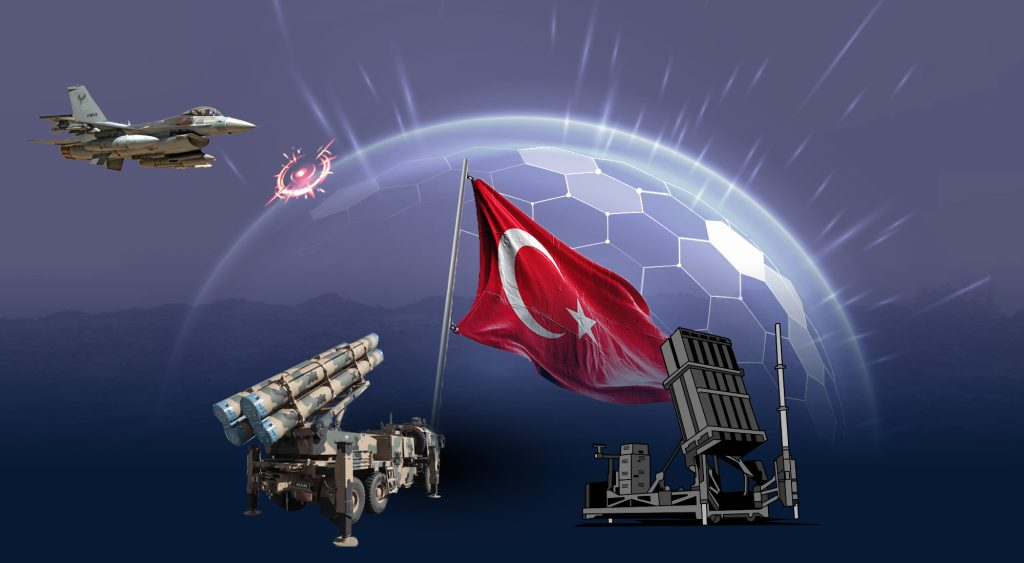
A chronic structural weakness is the lack of a domestic long-range, high-altitude air defense system. Turkish armament decisions often reflect domestic political considerations and temporary power-balancing with major powers rather than threat assessments. The purchase of the Russian S-400 system after the 2015–2016 crises exemplifies this reactive approach, sending a political message to Washington rather than genuinely enhancing air defense. Turkey’s expulsion from the F-35 program and the inability to integrate the S-400 with NATO networks have left its skies vulnerable to regional threats.
In the context of the Iran–US–Israel conflict and intensified missile exchanges in the Middle East, this vulnerability has become even more critical. Foreign radars deployed in Turkey, including the Kürecik base and Spanish systems at Incirlik, detect threats, while missile interception is managed by NATO fleets in the Mediterranean—outside Turkey’s national command chain. Falling missile debris in provinces like Hatay and Gaziantep illustrates how Turkish territory has become a battleground for foreign powers, despite government efforts to mask this dependency with nationalist narratives.
Historical experience—from the 1991 crisis to the deployment of European Patriots in the 2010s—shows that reliance on foreign defense entails human, sovereignty, and intelligence risks. Espionage over Turkish radar infrastructure further exacerbates vulnerabilities.
Three future scenarios are conceivable:
- Passive integration into Western defense architecture and acceptance of a peripheral role (most likely).
- Hasty arms acquisitions to project strength without addressing real gaps.
- Active participation in offensive coalitions in the event of a high-casualty incident (least likely).
Overall, the tension between Turkey’s rhetoric of independence and its practical dependency on Western defense networks has turned the country from an active regional actor into a vulnerable observer.