DID Press: According to a report by the East Strategic Studies Institute, the prolonged conflict between the United States and Iran over the past four decades has significantly shaped the foreign policies of regional states. Afghanistan, under Taliban rule, is particularly affected due to its geopolitical location, economic dependencies, and internal conditions.
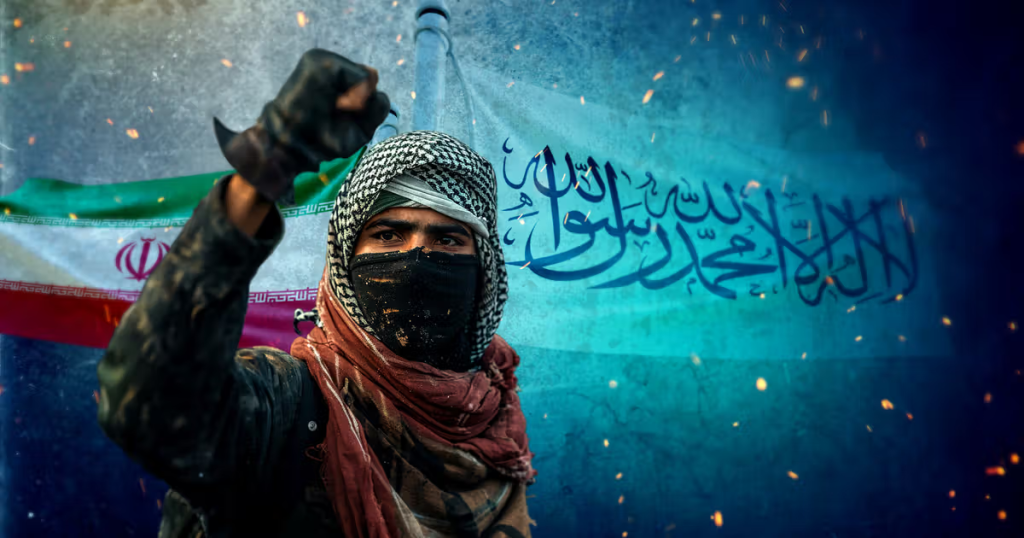
Since returning to power in 2021, the Taliban has pursued a cautious approach that outwardly emphasizes “neutrality” but demonstrates subtle alignment with Iran. Official statements by the Taliban have often taken a softer tone toward Iran, condemning US actions against Tehran—from the assassination of Qasem Soleimani to attacks on Iranian nuclear facilities. Restrictions on domestic media coverage of protests are also interpreted as constructive signals toward Iran.
Practical cooperation between Tehran and Kabul is evident in diplomatic visits, border security coordination, anti-narcotics operations, and refugee management. On sensitive issues, like Helmand water rights, the Taliban has avoided escalating conflicts, preferring dialogue. Interaction with the US remains limited, cautious, and largely symbolic, reflecting a strategy aimed at preserving economic, security, and geographic interests rather than direct confrontation with Washington.
The institute identifies five key factors driving this stance: Afghanistan’s economic reliance on Iran, border security imperatives, international isolation, lack of strategic cooperation with the US, and the need to manage domestic challenges.
Despite practical closeness to Iran, the Taliban cannot openly declare alignment due to the necessity of maintaining US channels for frozen assets, sanctions relief, and international legitimacy, as well as domestic sensitivities, particularly among Pashtun communities. The Taliban frames its foreign policy as “neutral and economically focused” to engage simultaneously with China, Russia, Arab states, and even Western powers.
The report outlines potential scenarios in the event of a US-Iran war:
- Maintain complete neutrality (most likely).
- Offer verbal or implicit support to Iran, the current pattern expressed through meaningful silences and economic cooperation.
- Take limited operational actions alongside Iran (least likely), as the Taliban lacks both capacity and incentive for direct involvement.
Summary: The East Strategic Studies Institute concludes that while the Taliban is practically closer to Iran, this proximity fits a model of “biased neutrality.” Kabul seeks to preserve economic and security ties with Tehran without provoking Washington. In the event of an escalated conflict, the Taliban is expected to maintain this cautious, non-direct support approach to safeguard its core interests and avoid regional entanglement.