DID Press: Tensions between Iran and Israel have intensified following strikes targeting critical infrastructure inside Israel. Images circulating after the attack on the Haifa refinery—one of the country’s most important energy facilities—show large-scale fires, while conflicting reports and limited official disclosures have fueled uncertainty about the true extent of the damage.
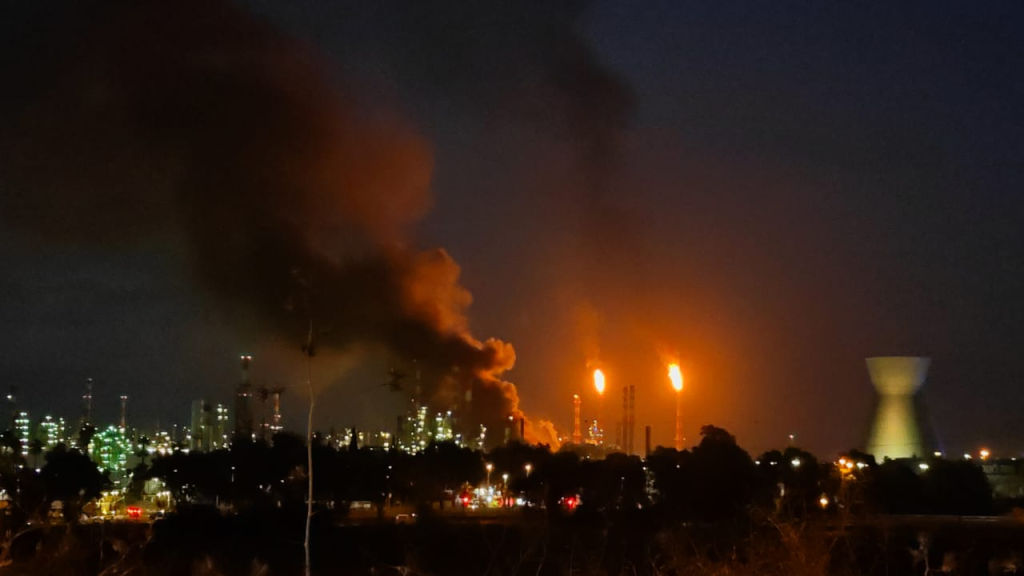
Israeli media reported that an Iranian missile directly struck the Haifa refinery, while the Israeli military acknowledged only impacts from debris in northern Israel. The strikes coincided with a wave of missile launches targeting the cities of Haifa, Tel Aviv, and Ashkelon, triggering air-raid sirens across these areas.
Footage from inside Israel shows significant fires at the heart of the Haifa refinery, a key hub for energy and petrochemical production that has previously been identified as a strategic target. Reports indicate the use of fragmentation or cluster-style munitions, which caused widespread damage across multiple locations in and around the city. Such weapons, due to their dispersal pattern, can complicate interception efforts and challenge air defense systems.
The scope of attacks extended to other sensitive areas as well. Air-raid sirens were activated in the port cities of Ashdod and Ashkelon, suggesting potential targeting of energy and oil infrastructure. The strike on Ashkelon is also linked to a historic oil pipeline running from Eilat to the Mediterranean coast.
Analysts say Iran appears to have adopted a “missile saturation” tactic—launching large numbers of projectiles followed by more precise strikes—potentially increasing the scale of destruction in recent attacks.
Despite the visible damage, a notable gap remains between on-the-ground reports and official Israeli statements. Media restrictions have limited detailed disclosures, particularly regarding military facilities and critical infrastructure. Reports indicate more than 12,000 compensation claims have been filed for property damage, while approximately 8,000 buildings—mainly in the Tel Aviv and Ashkelon areas—have reportedly been affected, placing additional strain on Israel’s economy.
Israel’s Energy Minister, Eli Cohen, described the damage as limited and emphasized the restoration of electricity supply. However, media coverage has focused heavily on residential destruction, reinforcing speculation about selective information control regarding the full scale of losses.