DID Press: Donald Trump has extended the deadline for an agreement with Iran by ten days as US financial markets suffered one of their worst days since the Middle East crisis began, according to the Financial Times. A sharp plunge in Wall Street indices, fueled by fears of an escalating conflict and rising energy costs, has prompted the White House to adopt a temporary adjustment in its approach, opening space for diplomacy.
Minutes after the market closed, Trump posted that, “at Tehran’s request,” the suspension of attacks on Iranian energy facilities would continue until April 6. He added that negotiations aimed at ending the conflict “are progressing well.” This move signals Washington’s oscillation between escalating military pressure and exploring dialogue channels with Tehran.
At the same time, the Pentagon has ordered the deployment of thousands of additional troops to the Middle East, a step analysts warn could pave the way for a potential ground operation in Iran—a scenario that carries a high risk of intense escalation. However, the extension of the deadline suggests that, for now, the White House may be unwilling to assume that immediate risk.
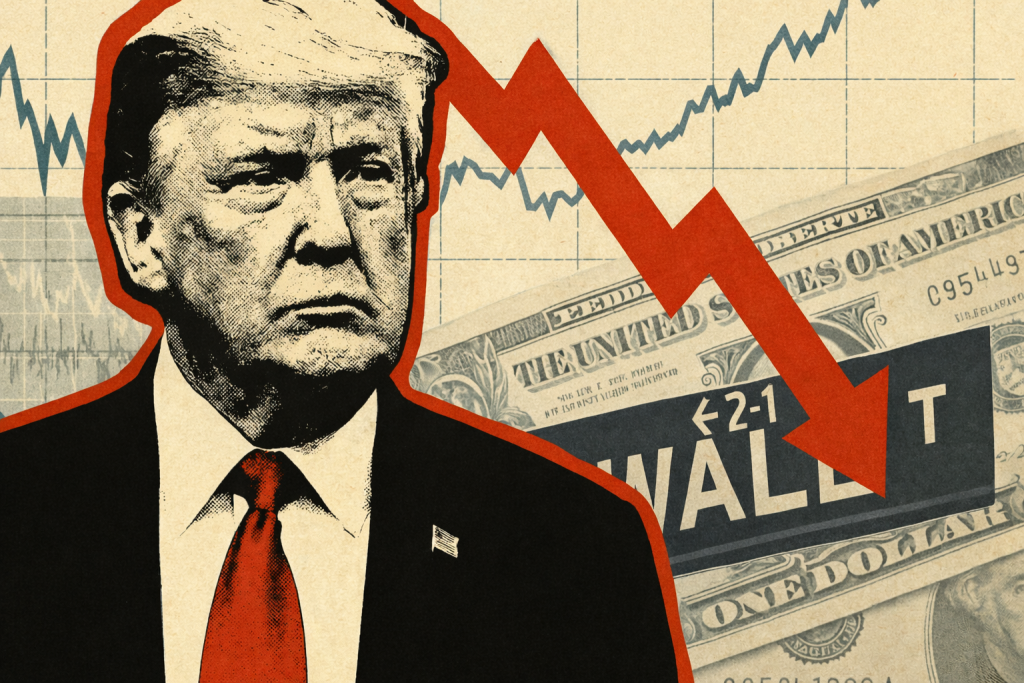
Global markets have been significantly affected. The S&P 500 fell 1.7% to its lowest point in six months, and the Nasdaq dropped 2.4%. Asian markets opened lower but managed to recover some losses later in the day. Brent crude, after surging the day before, eased slightly to around $107 per barrel. Rising energy costs and their inflationary impact have also reduced the likelihood of a Federal Reserve interest rate cut in the near term.
Financial analysts describe this market volatility as a reflection of “radical uncertainty” caused by the Middle East crisis—a state leaving investors navigating between retreat, rapid strategic shifts, and awaiting clearer political signals.
This extension follows Trump’s earlier demand that Iran reopen the Strait of Hormuz, which has been effectively closed since the start of the conflict. It is the second such postponement in a week, accompanied by references to “productive talks” with Tehran. Experts interpret these developments as Washington’s attempt to strike a delicate balance between military pressure and a diplomatic pathway, signaling caution in the face of escalating risk.
The extension of the deadline underscores the precarious position of U.S. strategy: while military threats remain on the table, the administration is simultaneously seeking to avoid further economic disruption and manage the political fallout of an open confrontation. The combination of financial market instability, energy price volatility, and potential military escalation highlights the high stakes of Washington’s policy, revealing a government navigating between coercion and diplomacy, uncertainty and control.